Using Variable Speed Drives In Retrofits
Beginning with whether or not a drive is even needed, the article moves on to help you clear hurdles involved with motor compatibility, existing starters, drive reliability, controls integration, and more.

For many retrofit projects, the use of a VFD seems like a “no brainer.” Drives are now cheaper and more reliable than ever, and the benefits of efficient control of motors can’t be beat. Still, there remain a number of nagging issues about application of drives in existing buildings that seem to come up on every project. As we have tried to find good answers to these questions, we have found a lot of information, but it is often far more theoretical than practical. This article provides a practical guide to assist you in the design of your next project.
Why Use Drives?
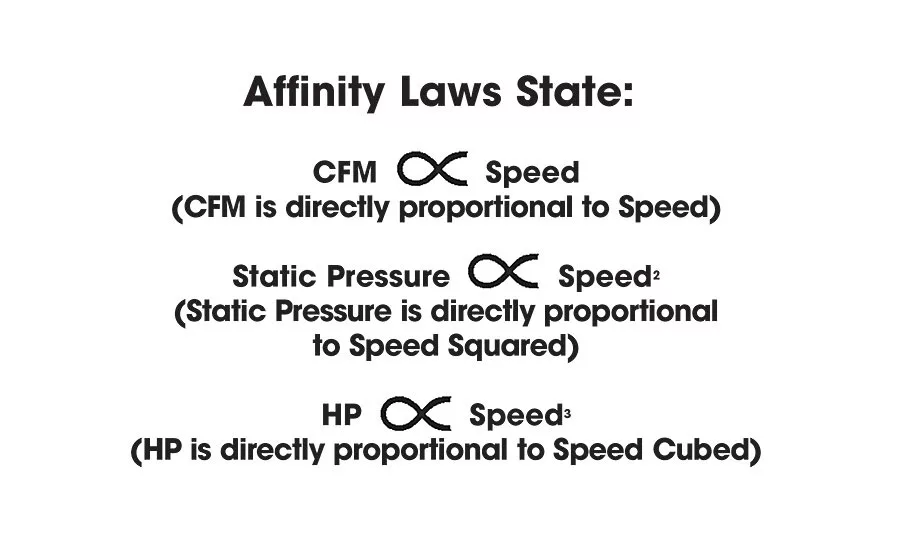
There are many benefits to using a VFD. Of course, the main advantage is in efficient control of motor speed, and as a result, regulating the capacity for a fan or pump. Energy savings generally follow the affinity laws in which motor speed is proportional to flow, and power used is proportional to the cube of speed.
Pnew=Pold(Nnew/Nold)3
P= Power
N= Speed
Often, we look for opportunities to convert systems that were originally designed for constant flow to variable-flow operation. For example, a fan on a constant-volume air handler with a 25 hp motor uses approximately 24 kW of energy. If we apply a VFD and operate this fan as a single-zone VAV system and the fan can operate much of the time at 50% speed, then our energy savings is Pnew = 24(.5)3 = 3 kW, or an 88% improvement in efficiency.
Drives also control volume more efficiently than other alternatives such as inlet guide vanes, discharge dampers, and even gearboxes and variable pitch fans. We often use them to retrofit existing variable flow systems, for example, by locking open existing inlet guide vanes, and installing a VFD to control the fan speed.
There are other additional benefits that come from the use of a VFD:
Ability to “soft start” the fan or pump, which helps reduce the wear on belts, sheaves, and couplings.
Improved controllability of systems. Drives tend to have less hysteresis and can provide more accurate control.
Simplifies or removes the need for a motor starter. Since the drive electronics include over current protection and contactors, the motor starter can be eliminated; however, a disconnect is still required.
The drive electronics provide built-in capability to do a series of functions including metering (kW, kWh, etc.), control, interlocks, and even avoid frequencies where a fan or pump may have unstable operation.
Are Drives Always the Best Solution?
While we see large benefits to the application of VFDs, their use should still be carefully considered, since we often see drives being applied where they really shouldn’t be used. In addition to the first cost for providing a drive, there are additional costs for the support and eventual replacement of the drive. It is also important to keep in mind that drives are not 100% efficient — they do use energy in the process of converting frequency and voltage wave forms to vary motor speed. Drive efficiency varies depending on the supplier, size of the drive, and the percentage of operation, but expect to see best-case efficiency losses of 2% to 4% for a drive running above 75% of normal motor speed. Efficiency tends to be even lower on smaller drives (under 5 hp) and for all drives when operating below 25% of normal motor speed.
We would discourage the use of drives in the following circumstances.
Applications where the motor is normally going to operate at 60 Hz (100%). For example, on a multiple cell cooling tower where one cell normally modulates capacity while the second runs at full speed.
Carefully consider using a drive on constant flow applications where the drive is used for balancing in place of a properly selected motor, pump, or fan. For example, it may make more sense to trim a pump impeller than to use a drive to reduce system flow.
Converting systems to variable flow also require careful design to ensure that all of the devices (chillers, boilers, heat exchangers, etc.) can tolerate variable flow and do not go below minimum allowable flow conditions.
Application Considerations
There are a number of concerns that come up when it comes to applying VFDs to existing building projects. These also largely apply for new construction projects as well.
Motor Compatibility
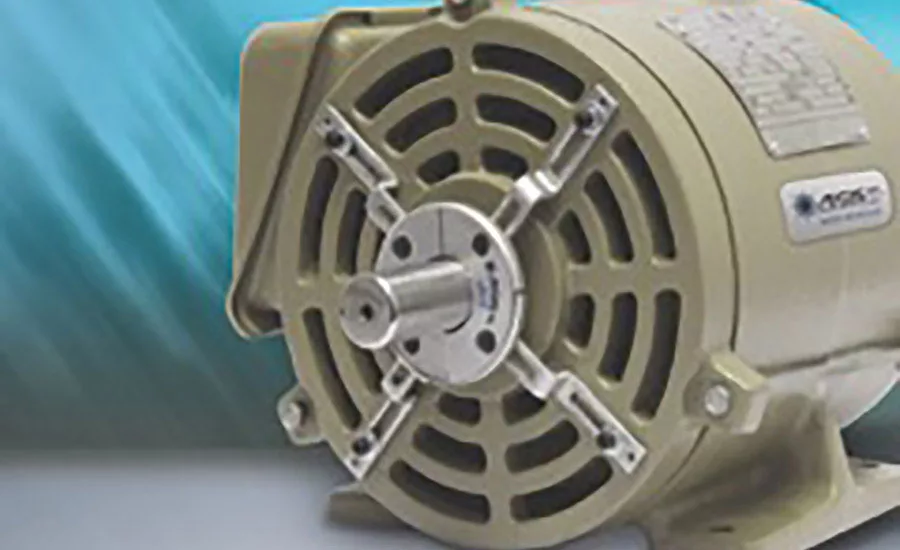
Concern: Most new motors are designed to work effectively with VFDs, but that is not necessarily the case with “pre-EPACT” motors installed prior to 1997. This raises a big question as to whether an existing motor should be used when adding a VFD or if the existing motor is adequate.
Practice: Often the advice is to look at the motor insulation rating, which should be on the nameplate. Motors that have an insulation rating of “F,” “H,” or “N” should be okay, while those rated “A” or “B” can be problematic. Having the motor evaluated, replaced, or re-wound is often recommended, but the simple truth is that every motor is going to have a finite service life. A motor that is 18+ years old may very well run for another 10+ years, or it could fail sooner. Adding a drive to that motor can potentially shorten the life of the motor, but not necessarily.
The decision whether to replace motors when adding a drive or to let the motor run until the end of its service life should be based on the application and the potential impact of motor failure. For most projects, adding a drive to an existing motor is an acceptable risk, and it works just fine. If, though, you have a critical application where there is no redundancy, then replacing the motor at the same time as adding the drive is recommended.
Grounding, Stray Currents, Lead Length
Concern: The use of drives can cause a series of motor problems. This includes damage to the insulation and to the motor bearings through various spikes and induced currents. Much has been written about this, and there are an abundance of products available to help alleviate these issues.
Practice: We follow a few simple guidelines to help address these issues. First, we only specify drives from leading suppliers that are specifically designed for HVAC application. Second, we require that the drive be mounted within 100 ft (33 meters) of the motor and that the motor leads be in a metallic conduit and properly grounded. If an owner is still concerned, then we will recommend the use of shaft grounding rings for added assurance. If you need to install a drive further away from the motor, then you should consult with the drive supplier for recommended solutions.
Existing Motor Starters
Concern: Existing pumps or fans will have a starter that provides for a way to disconnect the device, motor overload protection, and safety interlocks. The VFD provides for most of the functions covered by the starter, but will still require a disconnect and circuit protection.
Practice: There are two possible approaches. One is to order the drive with a built-in disconnect and to then install the drive in the place of the starter. Note that motor safeties such as the freeze stat, high-pressure switch, etc., should be wired as inputs to the drive. The alternative approach is to keep the circuit breaker function from the starter and to use it as the disconnect. The drive is wired in between the disconnect and the motor, and the motor control circuits are then wired into the drive.
Drive Reliability and Use of Bypasses
Concern: VFDs can be specified with a “bypass” so that the motor can potentially still operate in the event of a drive failure. Is it recommended to specify these?
Practice: In the early days of VFDs, the use of bypasses provided some level of assurance that the system could still be used even in the event that the drive failed. Since this was new technology (and failures were fairly frequent), a bypass was a good idea. Over the last 30 years, VFDs have become both more reliable and faster and easier to service. As a result, we do not generally specify the use of a bypass.
Controls Integration
Concern: Most drives come with a standard ability to integrate to the drive for one or more open protocols such as Modbus or BACnet. Should you specify integration to the drive and what data should go through this integrated connection?
Practice: We always specify integration to the drive so that we can bring data back to the BAS regarding the operation of the drive and the power usage for the motor. In effect, this is “free metering” for pumps and fans! Getting this meter data is invaluable in evaluating system performance or conducting measurement and verification, and it can help you earn LEED® credits.
While you can use this same integrated interface to communicate the drive operating mode and speed, we always utilize a separate hardwired interface for fan speed and on/off. We also find it is easier to troubleshoot and support having the control loop (i.e. the input for the static pressure sensor and the related PID loop) located in the BAS and not in the drive.
Harmonics
Concern: Since the VFD is an electronic device, it will tend to induce various harmonics back into the building. This can be alleviated with the use of filters or special drives.
Practice: This is not generally an issue unless the equipment controlled by drives is more than 30% of the building load. If that is the case, then you will need to consider the use of filters, or of 18 pole drives. Of course, both of these are more expensive options, so the cost needs to be carefully weighed against the benefits.
Conclusion
The many benefits that result from the use of a VFD make this a “go to” solution for any new or existing high-performance project. While the application is not without risk, following the practical guidelines above should help you have a successful project.
Looking for a reprint of this article?
From high-res PDFs to custom plaques, order your copy today!