Question Everything When Replacing Commercial Boilers
“Trust but verify” was a Russian proverb that President Ronald Reagan used often in Cold War discussions with Russian President Mikhail Gorbachev, and it is appropriate to keep in mind when asked to design or replace a commercial boiler. One of the driving credos I have used in my years in the industry is: “Always assume that the old boiler is installed incorrectly.”
Although the majority of the boilers have been installed properly, there have been many that were not. Those boilers that were not installed correctly would have been very costly to fix had we not seen the issues prior to installing the new ones. Any issues with the heating system become your issues once the new boiler is installed. If you have been doing this for any length of time, you have heard the phrase: “It worked before you replaced the boiler.” Whether you are designing or installing a boiler, there are certain things that you should know when replacing the heating plant. Consider it your due diligence. The most important part of any boiler retrofit is the boiler room walkthrough. You must see the system that the new boiler will be joining. This includes electrical, flue, and most importantly, piping.
So, what is in the boiler room?
Clearance
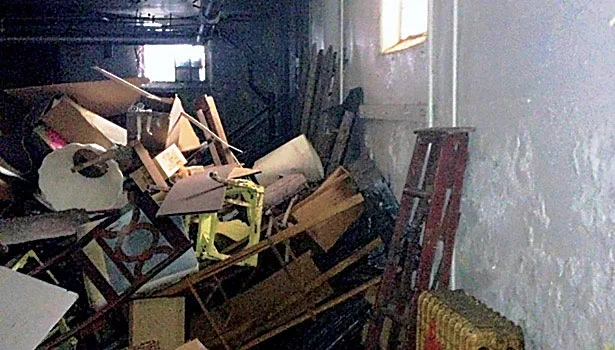
The boiler room seems to be the repository of any junk, scrap, old papers, broken parts, and garbage. You have to decide where to install the new boilers. Each boiler requires a certain amount of clearance around it for service and safe operation. Is there junk around the boiler? What about papers stacked next to the boiler? A school in my area would store the paper student records next to the boilers. One day, the burner malfunctioned and the flame rolled out, igniting the boxes of student records. Read the installation manual and local codes for how much clearance is required around the boilers. It is typically about 12 to 30 in.
Exhaust Fan
During the asbestos abatement project, all the insulation was removed from the steam piping. The boiler room was so warm that the classroom above the boiler room had melted floor tiles. In an effort to cool the boiler room, someone installed a thermostatically operated exhaust fan. The original combustion air louvers were sized for the boiler only and were too small when the exhaust fan operated. The exhaust fan drew the room into a negative condition and pulled the flue gases from the boiler and water heater and filled the boiler room with a dangerous mixture of toxic gases. It also caused the boiler to soot, which exacerbated the issue. The steam piping had to be reinsulated and exhaust fan disabled. If the room has an exhaust fan, verify that it has ample combustion air or a makeup air fan.
Expansion Tank
If you are re-using the existing expansion tank, you will need to verify that it is sized properly and is in usable condition. If you will re-use it, I would suggest replacing the sight glass fittings and Airtrol fitting in the bottom.
Combustion Air
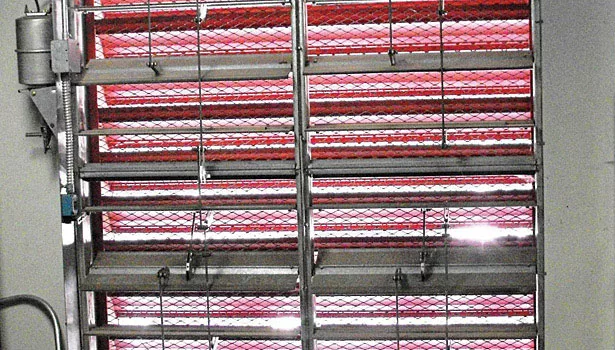
Every boiler requires air for proper combustion. Many of the new boilers use combustion air directly connected to the outside. If so, the manufacturer will inform you of the size required. If the boilers use boiler room air for combustion, you will have to introduce air to the boiler room. The most common way is with openings in the outside wall. The following is the sizing you will need for direct open combustion air sizing.
Size of Direct Openings
• 1-in free area for each 4,000 Btuh
• Horizontal openings — 1 in free space for each 2,000 Btuh
• Vertical openings — 1 in free space for each 4,000 Btuh
• Mechanical ventilation - 1 cfm per 2,400 Btuh
Boiler Room Heat
Once upon a time, there was a quiet little kingdom that used boilers to heat the buildings. The boiler room where these modern marvels were situated was usually a toasty place. The king entered one of these boiler rooms to meet with the common folk, felt the heat, and wailed that this was wasteful as he perspired for the first time in his life. He decreed that all boiler rooms should not be so warm, so he tasked his staff with coming up with a solution. They suggested that they isolate the idle boilers, increase the insulation on the pipes, increase the combustion air opening size, and change the flue from single-wall to double-walled vent pipe, much to the chagrin of the installers who complained about the extra costs.
The law of the land was enacted, and the citizens soon realized two unintended consequences. First, the boiler room temperature did drop, quite a bit. In fact, it was so cold in some boiler rooms that the gas valves would not open, making it even colder. The second consequence was that the boiler efficiency dropped by using the cold, denser air. So the king added an addendum to his decree that all boiler rooms should also have heaters in the boiler room to make it toasty once again. All was well in the kingdom. Long live the king.
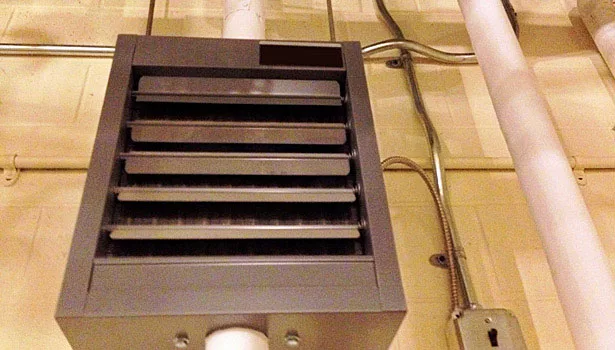
If the boiler room has no heat, then you may have to install heaters inside the room because the new boilers do not produce as much ambient heat as the older boilers. In addition, isolation of the idle boilers will lower the boiler room temperature.
“Ask the custodian what he thinks about your new boilers,” the installer said with a grin.
“Why?” I asked.
“You will see,” he said with the same grin. I asked the custodian what he thought of the new boilers and he said, “I don’t like them.” I asked why and he just hemmed and hawed and finally told me the real reason for not liking my new boilers. Every winter day for the 20 years he worked in the boiler room, he would place the soup his wife made under the boiler, and the radiant heat from the boiler would heat it. Now, there was nowhere he could heat his soup. I thanked him for his candor and purchased a small microwave oven for him. He liked my boilers after that.
Air Conditioner
If the boiler room has an air conditioner, the International Mechanical code requires that either the combustion air has to be directly vented to each fuel-burning appliance or the room has to have a refrigerant monitoring system that will detect and alarm if it senses leaking refrigerant. This could be expensive if you have to include it later.
Operating Pressure
If you are replacing a steam boiler, note the operating pressure for the boiler. Since 1899, most low-pressure steam systems were designed using 2 lbs/sq in. If the boiler is set for higher than that, there could be some system issues that will require investigation. If the system is a hydronic system, the system pressure should be about 1 psi per 2 ft height of the tallest radiator.
Gas Pressure
If the existing boiler has an atmospheric burner, the new boiler may require much higher gas pressure than the old one. If the old burner used high pressure gas, this should be known prior to the design or ordering of the new unit.
Pump Sizing
If you are re-using the existing pumps, you should verify that they are sized to handle the load of the building. We had one project where the existing pump was half the size required. This caused too high of a temperature rise and ruined the old boiler. The pump had to be replaced with one that was sized properly.
Pipe Sizing
The size of the boilers is limited to the existing pipe size. This should be noted so that it can be factored into the new design. If the piping is too small, it could lead to system problems.
Boiler Sizing
When sizing a replacement heating system, steam systems are sized differently than a hydronic system. A hydronic system is sized according to the heat loss of the building and a steam system is sized according to the connected load. If you size a steam system according to the heat loss of the building, you will have the incorrect size.
Asbestos
Asbestos is a danger inside a boiler room, as inhalation of asbestos causes several serious illnesses including lung cancer, mesothelioma, and asbestosis. If the existing heating system was installed prior to 1972, it most likely contains asbestos. The asbestos could be on the flue or piping. It was typically used at the pipe fittings. Asbestos looks like a bright white flaky substance. Most facilities have had the insulation tested and should be able to inform you if any asbestos is in the boiler room. Some of the older cast iron boilers used asbestos rope between the sections or on the flue collector to seal in the boiler flue gases.
In most instances, the company performing the asbestos testing in the facility would not know that and could have omitted it in their report. If you have any doubt, always have it checked. A safe idea is to add a disclaimer to your proposal that asbestos abatement is not covered in your initial quote. The remediation costs could be very high.
Dissimilar Metals
Mixing black iron pipe with copper could cause electrolysis or galvanic metal corrosion. This corrosion generates a small electrical current as a result of the two dissimilar metals and an electrolyte, water. This electrolysis can cause erosion of the metal, typically the black iron fittings. If you must join the two metals, a dielectric fitting should be used. The dielectric fitting separates the two metals and eliminates the chance of the galvanic corrosion.
Door Opening
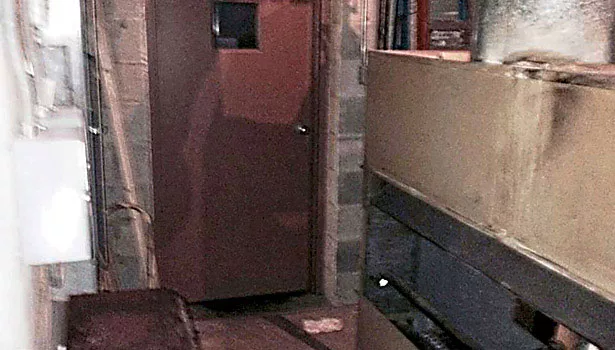
If the opening to the boiler room is limited to a small door, you have to consider that when designing a new heating system. You will have to find a system that fits through the door unless you plan to enlarge the opening size.
Invite the Boiler Rep
When you are looking at a boiler project, invite the local boiler representative to accompany you. He or she can provide much more experience and that extra pair of eyes may spot something you missed. They also like getting out of the office.
Chemical Feed Boilers
This will require chemical treatment, and you should verify that there is a system to provide chemicals for the new heating system.
Question Everything
The second-most-important task is to talk with the person responsible for the daily operation of the existing boilers. I like using open-ended questions so I can to get a better feel for the job, rather than asking questions that require a yes or no answer. The following are some of the questions that I like to ask when meeting with the building representative.
Which areas are the hardest to heat? This question assumes that there are indeed problems in the existing system because you will own any problems when the new boiler is installed. This will also separate you from the incompetent installer or designer. If it is a substantial repair, you may be able to add a disclaimer to your proposal absolving you of the responsibilities of the problem. We had a building where the original installer had installed the three-way valves backwards. We got the job because we asked questions and provided a solution.
Why are you replacing the boiler? Is it energy costs? If the client is using energy costs as the purchasing reason, they may be disappointed as the cost to replace a boiler easily dwarfs the savings in most cases. It may take 20 years to pay for the replacement boiler. This should be discussed up front.
What system issues or problems should I know about? If the distribution system has some issues, the replacement boiler may not resolve those problems. You will then have a client who spent lots of money with the unacceptable results. They will not be happy. We had a customer that wanted to replace a boiler because the top floors of the building were cold. His service company told him that the boiler was too small. We found that the system had insufficient water pressure and air bound radiators. We raised the system pressure and replaced the automatic air vents. The system worked great. The client decided that he did want to replace the boiler after our repair. That may seem to be a self-sabotaging idea but the client turned out to be a rainmaker for our firm. He uses our company for service on all his boilers and had us replace the boilers in three other buildings. In addition, he tells all his friends to use us. The old boiler is still there, but we have made a friend and an avid supporter of our company.
Is reliability important to you? I realize that reliability is important to everyone but some facilities require backup heat due to the needs of the building. If reliability is vital to the customer, you might suggest modular or multiple boilers which offer some backup in the event of a malfunction.
Does the client have a boiler preference? If the client likes cast iron boilers and you prefer copper boilers, this should be discussed prior to you investing much time on the proposal or design.
Can one boiler handle the load? If the existing heating system had two boilers, this is a very pertinent question. This will help you when sizing the new heating plant. Typically, old boiler rooms sized the boilers for 66-75% of the load. In that way, if one boiler failed, the building would still have some heat, depending on the time of year. The onsite person will be able to give you some guidance on that.
Do you have a budget number for this project? You need to know how much the client would like to spend on their new heating system. My father used to say, “You have steak tastes on a peanut butter budget.” Are you thinking of a high-end system complete with new pumps and compression tanks and your client barely has enough to replace one boiler? If the client balks at giving you a price, you could try bracketing the project. It may sound something like this, “A new heating system will cost anywhere between $50,000 and $200,000. Can you tell me if your budget is closer to the $50,000 or the $200,000?” This simple question will help you design a system that is within the budget parameters. What happens if the client balks about the lower price? Now is the time to work on that, rather than after you spend all the hours to design and price a replacement system.
Be careful when replacing an old boiler with a new one since it could have hidden traps.
Looking for a reprint of this article?
From high-res PDFs to custom plaques, order your copy today!