search
Ask ACHR NEWS AI
cart
facebook twitter instagram linkedin youtube
  • Sign In
  • Subscribe
  • Sign Out
  • My Account
  • NEWS
  • TECHNOLOGY
    • Heating & Boilers
    • Cooling & Chillers
    • Pumps & Flow Controls
  • SECTORS
    • Commercial
    • Health Care
    • Data Center
    • Educational Facilities
  • DESIGN | CONSTRUCTION
  • OTHER TOPICS
    • High-Performance Buildings & Automation
    • Ventilation and IAQ
    • Commissioning
    • HVAC Retrofits
  • TODAY’S BOILER
    • Today’s Boiler Archives
    • Today’s Boiler Digital Edition
  • MORE
    • Case Studies
    • Podcasts
    • Videos
    • Directory
    • Webinars
    • ES NEWS Store
    • White Papers
  • SIGN UP
  • Back to The NEWS
Engineered Systems NEWSHVAC Engineering TechnologyHVAC Engineering SectorsHigh-Performance Buildings & AutomationPumps & Flow ControlsCommercial HVAC

BUILDING AUTOMATION

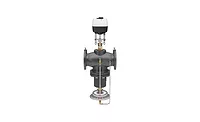
Pressure-Independent Control Valves

PICV technology has its benefits, but is it worth it?

By Paul Ehrlich P.E.
BuildingAutomation
December 1, 2014

On several recent projects, we have had control contractors who have promoted the use of pressure-independent control valves (PICV). This has led to some interesting discussions about the costs and benefits of these valves. 

The original concept of a PICV was basically a single casting that included both a control valve (generally a ball valve) along with a pressure regulator for flow control. In effect, it was a balancing valve and control valve in a single package. More recently, suppliers are starting to offer more sophisticated solutions that include logic as part of the valve assembly along with a control valve, flow meter, and optional temperature sensors. These electronic PICVs may be more cost-effective for larger sizes and offer additional benefits in terms of monitoring and control.

The concept of pressure-independent control is that you should be able to have the same amount of flow through a device regardless of the inlet pressure. For example, a pressure-independent VAV box controller operates by resetting the flow setpoint in response to zone temperature. The box flow is controlled regardless of any variation in the incoming air pressure. The anticipated result is more stable control, plus improved feedback on system operation. 

The suppliers of PICVs claim numerous benefits resulting from the use of these valves. Potential benefits include:

• Improved control stability — for example, the discharge air temperature of an air handler should be more stable.

• Reduced system pumping energy due to reduced overflow of the coil.

• Improved chiller and boiler efficiency by having the system run at the design Delta T.

• Cost reduction due to fewer devices.

• Improved visibility to the operator about the operation of the valve and coil.

All of these could definitely be beneficial. However, the more critical question is whether the benefits are worth the added costs. We have been focusing on the use of either mechanical or electronic pressure independent valves for large air handlers. There is definitely a cost premium to the use of these valves; on a recent project, the cost of the valve with installation was two to three times that of a globe valve. The question then becomes is it worth it?

To determine this, we ran a version of our energy model using a plug in to simulate the PICV. After several runs, we did find that there were benefits in terms of reduced system pumping, resulting in a simple payback on the premium for the valves of a few years. Given the other potential benefits (including improved discharge control, better operator feedback, and the potential for Btu metering at the coil), it seemed worth considering.  

We would encourage readers to keep an open mind and carefully consider the use of PICVs for your next project.

Share This Story

Looking for a reprint of this article?
From high-res PDFs to custom plaques, order your copy today!


Paul Ehrlich is the founder and president of Building Intelligence Group LLC, a consulting firm focused on the delivery of energy efficient commercial buildings with a  focus on controls, systems integration, and building to grid integration. For more information, see www.buildingintelligencegroup.com.

Recommended Content

JOIN TODAY
To unlock your recommendations.

Already have an account? Sign In

  • HVAC-enrollment

    The Trades Are Back: HVACR Programs See Nearly 30% Enrollment Spike

    A new wave of future technicians is entering the pipeline.  
    Training and Education
    By: Matt Jachman
  • 2025 Top 40 Under 40

    2025 Top 40 Under 40 HVACR Professionals List

    The 11th annual Top 40 Under 40 list highlights those...
    HVAC Contracting
    By: Hannah Belloli-Oster
  • LG Ductless Mini-Split Systems

    The 9 Types of Heat Pumps

    As the U.S. moves toward electrification, heat pumps are...
    Heat Pumps
    By: Joanna R. Turpin

More Videos

Today's Boiler

Spring 2026 Issue

Today's Boiler - Spring 2026 Cover

Read More from Today's Boiler

Case in Point Logo

Smarter Hydronic Design for Data Centers - Free Webinar - January 22, 2026

Related Articles

  • Siemens Building Technologies Div.: Pressure-Independent Control Valves

    See More
  • Danfoss, Heating Solutions: Pressure-Independent Control Valve Actuator

    See More
  • Danfoss Novo

    NovoCon Digital Control Valves – Danfoss

    See More

Related Products

See More Products
  • Manual Q.jpg

    Manual Q - Low Pressure, Low Velocity Duct System Design

  • pewtpm.png

    Pressure Enthalpy Without Tears Manual

  • controltransformersdvd.jpg

    UNDERSTANDING CONTROL TRANSFORMERS

See More Products

Related Directories

  • Griswold Controls

    Automatic flow control valves, manual balancing valves, actuated control valves, pressure independent control valves, DeltaT Control valves, actuators, diaphragm valves, and coil piping packages.
  • Hydronic Components Inc. (HCi) (Manufacturer)

    HVAC & Hydronic piping solutions; including manual and automatic balancing valves, 6-way control valves, isolation valves, strainers, hose kits, pressure independent control valves, and unions.
  • Hydronic Components Inc. (HCi) (Software/Video)

    HVAC & Hydronic piping solutions; including manual and automatic balancing valves, 6-way control valves, isolation valves, strainers, hose kits, pressure independent control valves, and unions.
×

Sign Up. Stay Informed.

The #1 trusted source for the HVACR industry since 1926

SUBSCRIBE
  • RESOURCES
    • Advertise
    • Contact Us
    • Advisory Board
    • Classifieds
    • Submit a Letter
    • Directories
    • Store
  • ACCOUNT CENTER
    • Create an Account
    • Start a Subscription
    • Manage My Account
    • Sign Up for Newsletters
    • Visit Customer Service
    • Update Preferences
  • SERVICES
    • Marketing Services
    • Reprints
    • Market Research
    • List Rental
    • Survey/Respondent Access
  • STAY CONNECTED
    • LinkedIn
    • Facebook
    • Instagram
    • YouTube
    • X (Twitter)
  • PRIVACY
    • PRIVACY POLICY
    • TERMS & CONDITIONS
    • DO NOT SELL MY PERSONAL INFORMATION
    • PRIVACY REQUEST
    • ACCESSIBILITY

Copyright ©2026. All Rights Reserved BNP Media, Inc. and BNP Media II, LLC.

Design, CMS, Hosting & Web Development :: ePublishing