search
Ask ACHR NEWS AI
cart
facebook twitter instagram linkedin youtube
  • Sign In
  • Subscribe
  • Sign Out
  • My Account
  • NEWS
  • TECHNOLOGY
    • Heating & Boilers
    • Cooling & Chillers
    • Pumps & Flow Controls
  • SECTORS
    • Commercial
    • Health Care
    • Data Center
    • Educational Facilities
  • DESIGN | CONSTRUCTION
  • OTHER TOPICS
    • High-Performance Buildings & Automation
    • Ventilation and IAQ
    • Commissioning
    • HVAC Retrofits
  • TODAY’S BOILER
    • Today’s Boiler Archives
    • Today’s Boiler Digital Edition
  • MORE
    • Case Studies
    • Podcasts
    • Videos
    • Directory
    • Webinars
    • ES NEWS Store
    • White Papers
  • SIGN UP
  • Back to The NEWS
Engineered Systems NEWSHVAC Engineering SectorsVentilation and IAQCommercial HVAC

BUILDING AUTOMATION

Control Of Critical Environments

In these applications, reliability and accuracy are of primary importance.

By Paul Ehrlich P.E.
BuildingAutomation
November 1, 2014

Most commercial building system designs including controls and building automation are carefully constructed to balance between reliability, performance, efficiency, and budget. On all projects, the need to provide reliability, accuracy, and safety need to be carefully considered as part of the overall design, but when we start looking at critical environments, these requirements become paramount in the design process.

Critical environments refer to the areas or systems that are considered to be mission critical or in other words facilities or areas where losing systems such as lights, power, or HVAC would result in health, safety, or major economic impacts. Some examples of areas often considered as critical can include:  data centers (generally Tier 2 or higher), laboratories, critical areas in hospitals (i.e. operating rooms, isolation rooms, labs), call centers, etc.

Start by Defining Requirements

When designing controls for a critical environment, it is imperative to start with a solid understanding of the operational parameters. What areas would be considered critical? Does a certain range of temperatures and humidity levels need to be maintained? Are there specific needs for pressure relationships, air changes, or outdoor air? Do these requirements vary when the space is occupied or unoccupied? Are there special emergency modes (such as a purge) required? What are the requirements for uptime and the impact of a loss of power or space conditioning? Documentation of the owner’s requirements can be used to drive and test the project design and implementation. 

Special Design Considerations

Design work should be driven from the owner’s requirements. Much of this is fairly straightforward, such as the system selections and specific sequences. In addition, there are several areas of special requirements that are needed for critical environment projects:

Reliability and redundancy. On most critical systems, there is very little tolerance for downtime. This drives the design process to select systems that are redundant and controls that will automatically detect failure and bring on an alternate device. Most control systems gain reliability through the use of a distributed architecture, but for super-critical systems, the use of redundant control systems (either of commercial or industrial grade) should be considered as an option. 

Accuracy. One of the requirements for a critical environment may be very accurate control. For example, some process or laboratory areas may require control and reporting to a fraction of a degree. To achieve this, consider the use of more accurate sensors such as platinum RTD instead of thermistor. 

Reporting. Certain regulated areas, such as pharmaceutical manufacturing, have very specific requirements for reporting. This requires the selection of a control system that can meet these requirements for tracking all changes and data within the system.

Careful consideration should be taken in selecting of both the controls product and contractor for critical environment projects. Some designers elect to utilize industrial style controls (PLC and SCADA) instead of conventional BAS. Others elect to only work with control contractors that have demonstrated experience in working in these critical areas.

In summary, controls for critical environments need to start with a good understanding of the requirements, and drive through the design process, contractor selection, installation, and commissioning.

Share This Story

Looking for a reprint of this article?
From high-res PDFs to custom plaques, order your copy today!


Paul Ehrlich is the founder and president of Building Intelligence Group LLC, a consulting firm focused on the delivery of energy efficient commercial buildings with a  focus on controls, systems integration, and building to grid integration. For more information, see www.buildingintelligencegroup.com.

Recommended Content

JOIN TODAY
To unlock your recommendations.

Already have an account? Sign In

  • HVAC-enrollment

    The Trades Are Back: HVACR Programs See Nearly 30% Enrollment Spike

    A new wave of future technicians is entering the pipeline.  
    Training and Education
    By: Matt Jachman
  • 2025 Top 40 Under 40

    2025 Top 40 Under 40 HVACR Professionals List

    The 11th annual Top 40 Under 40 list highlights those...
    HVAC Commercial Market
    By: Hannah Belloli-Oster
  • LG Ductless Mini-Split Systems

    The 9 Types of Heat Pumps

    As the U.S. moves toward electrification, heat pumps are...
    Air Source Heat Pumps
    By: Joanna R. Turpin

More Videos

Today's Boiler

Spring 2026 Issue

Today's Boiler - Spring 2026 Cover

Read More from Today's Boiler

Case in Point Logo

Smarter Hydronic Design for Data Centers - Free Webinar - January 22, 2026

Related Articles

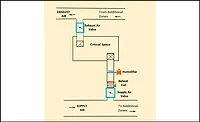
  • Figure 1: Critical space diagram.

    Adding resiliency to pressure control of critical spaces

    See More
  • Aug. 4, 2004: Honeywell Launches Health & Critical Environments Division

    See More
  • milling white paper

    Dehumidification Strategies for Critical Environments

    See More

Related Products

See More Products
  • Modern Geothermal HVAC Engineering and Control Applications

  • ShowISBNImage.jpg

    Electricity, Electronics, and Control Systems for HVAC, 4/e

  • controltransformersdvd.jpg

    UNDERSTANDING CONTROL TRANSFORMERS

See More Products

Events

View AllSubmit An Event
  • ACG: Indoor Environments: Wellness & Sustainability for Building Occupants

    Review why the Health & Wellness of buildings, is such a hot topic. The presentation will illustrate why we are where we are today. Show what can be done about improving the environment in which we spend most of our time. Review what can be implemented for a better working environment.
View AllSubmit An Event

Related Directories

  • Critical Environment Technologies

    Leader in the design, manufacture and service of fixed gas detection equipment for the HVACR industry and other commercial markets worldwide.
  • Ambrose Precision Environments

    American made Air Conditioning for DOAS, IAQ, Comfort cooling, Data Center and Critical Systems Environmental Control. Custom and stock, horizontal and vertical, packaged or split air conditioning and more.
×

Sign Up. Stay Informed.

The #1 trusted source for the HVACR industry since 1926

SUBSCRIBE
  • RESOURCES
    • Advertise
    • Contact Us
    • Advisory Board
    • Classifieds
    • Submit a Letter
    • Directories
    • Store
  • ACCOUNT CENTER
    • Create an Account
    • Start a Subscription
    • Manage My Account
    • Sign Up for Newsletters
    • Visit Customer Service
    • Update Preferences
  • SERVICES
    • Marketing Services
    • Reprints
    • Market Research
    • List Rental
    • Survey/Respondent Access
  • STAY CONNECTED
    • LinkedIn
    • Facebook
    • Instagram
    • YouTube
    • X (Twitter)
  • PRIVACY
    • PRIVACY POLICY
    • TERMS & CONDITIONS
    • DO NOT SELL MY PERSONAL INFORMATION
    • PRIVACY REQUEST
    • ACCESSIBILITY

Copyright ©2026. All Rights Reserved BNP Media, Inc. and BNP Media II, LLC.

Design, CMS, Hosting & Web Development :: ePublishing