search
Ask ACHR NEWS AI
cart
facebook twitter instagram linkedin youtube
  • Sign In
  • Subscribe
  • Sign Out
  • My Account
  • NEWS
  • TECHNOLOGY
    • Heating & Boilers
    • Cooling & Chillers
    • Pumps & Flow Controls
  • SECTORS
    • Commercial
    • Health Care
    • Data Center
    • Educational Facilities
  • DESIGN | CONSTRUCTION
  • OTHER TOPICS
    • High-Performance Buildings & Automation
    • Ventilation and IAQ
    • Commissioning
    • HVAC Retrofits
  • TODAY’S BOILER
    • Today’s Boiler Archives
    • Today’s Boiler Digital Edition
  • MORE
    • Case Studies
    • Podcasts
    • Videos
    • Directory
    • Webinars
    • ES NEWS Store
    • White Papers
  • SIGN UP
  • Back to The NEWS
Engineered Systems NEWSHVAC Engineering SectorsHigh-Performance Buildings & AutomationCommercial HVAC

BUILDING AUTOMATION

Controls & Occupancy

Existing sensor strategies and newer lighting tech continue the battle against wasteful energy use.
By Paul Ehrlich P.E.
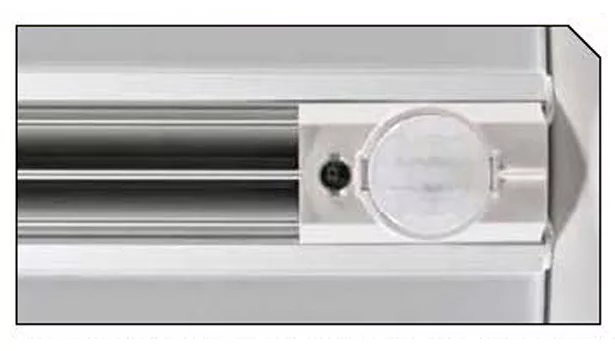
LED fixture, integrated sensor
FIGURE 1. LED fixture with integrated sensor. Photo courtesy CCRE.
July 1, 2014

Much of the energy usage in a commercial building can be attributed to systems that are operating under the assumption that the building is “occupied.” Generally in an occupied mode, the lights are on, HVAC systems are operating, and we are delivering code-required ventilation, as well as occupied heating and cooling setpoints.

On many sites, occupancy is determined through a schedule that often starts early in the morning (in anticipation of the first occupants’ arrival) and runs until late at night after the last occupants (often a cleaning crew) are gone. We know though that these assumptions about occupancy are flawed. The actual building occupancy hours may be much shorter than how the schedule is set up, and even during these hours, not all spaces are fully occupied at all times. The end result is often that we are conditioning space for many more hours than is required, resulting in significant energy waste.

There are many solutions that can be used to attempt to measure building and zone occupancy. Here are a few.

  • Motion sensors.There are a number of motion-sensing technologies including the use of sonic and passive infrared (PIR) sensors. Motion sensors can be used for both control of lighting as well as for HVAC systems (more on this later). Note that many of these sensors can be configured to sense both occupancy (when someone enters a space) and vacancy (when someone is no longer in the space), or both.
  • CO2sensors.Sensing CO2levels provides a proxy for the level of building occupancy and is best used as a strategy for demand controlled ventilation.  
  • Use of security system data.Security systems generally know when the whole building (and in some cases, specific areas) are occupied. Input to these systems includes card access as well as other sensors. This data is often best used as an input for operating systems outside of normal operating hours.

Of these options, motion sensors are the best for control of lighting control systems, while CO2sensors are generally used for ventilation level control. Using integration, it is possible to use the sensors that are part of a lighting control system as an input for the BAS to better operate the HVAC system. In many lighting control systems, there are motion sensors installed in each major zone. These are fairly easy to integrate so that the same inputs used to turn on or off lights can also be used to reduce zone ventilation when an area is unoccupied and to make sure it is fully ventilated when occupied. This is a great solution, especially for areas such as private offices, conference rooms, and classrooms that may have variable occupancy.

At Lightfair last week, we saw a number of new next-generation lighting control solutions.  These are systems that incorporate a sensor (generally for daylight and occupancy) into each fixture. Most of the systems connect wirelessly with wall switches to provide a complete, granular lighting control system. Each system is different, but several come integrated with new LED fixtures, many are self-configuring, and some even include temperature sensing at the wall and fixture. We expect to see these systems continue to improve, perhaps to the point where they can be used not just for occupancy sensing but also for people-counting. This development makes integration between lighting and BAS even more valuable with the lighting control system becoming the main way to determine occupancy.  

Share This Story

Looking for a reprint of this article?
From high-res PDFs to custom plaques, order your copy today!


Paul Ehrlich is the founder and president of Building Intelligence Group LLC, a consulting firm focused on the delivery of energy efficient commercial buildings with a  focus on controls, systems integration, and building to grid integration. For more information, see www.buildingintelligencegroup.com.

Recommended Content

JOIN TODAY
To unlock your recommendations.

Already have an account? Sign In

  • HVAC-enrollment

    The Trades Are Back: HVACR Programs See Nearly 30% Enrollment Spike

    A new wave of future technicians is entering the pipeline.  
    Training and Education
    By: Matt Jachman
  • 2025 Top 40 Under 40

    2025 Top 40 Under 40 HVACR Professionals List

    The 11th annual Top 40 Under 40 list highlights those...
    HVAC Contracting
    By: Hannah Belloli-Oster
  • LG Ductless Mini-Split Systems

    The 9 Types of Heat Pumps

    As the U.S. moves toward electrification, heat pumps are...
    Ground Source Heat Pumps
    By: Joanna R. Turpin

More Videos

Today's Boiler

Spring 2026 Issue

Today's Boiler - Spring 2026 Cover

Read More from Today's Boiler

Case in Point Logo

Smarter Hydronic Design for Data Centers - Free Webinar - January 22, 2026

Related Articles

  • Building Automations

    Measuring Building Occupancy

    See More
  • Building Automations

    Impact Of ASHRAE 90.1 On Controls And BAS Design

    See More
  • BuildingAutomation

    Controls Optimization: No Longer Optional

    See More

Related Products

See More Products
  • Digital Controls for HVAC Technicians

  • ghpm.png

    Gas Heating: Furnaces, Boilers, Controls, Components

  • Manual Q.jpg

    Manual Q - Low Pressure, Low Velocity Duct System Design

See More Products

Events

View AllSubmit An Event
  • September 25, 2025

    Smarter HVACR Controls Lead to Improved Contractor Profits

    On Demand This session dives into practical strategies for controlling and monitoring multiple pieces of equipment at multiple locations, catching issues early, and streamlining maintenance, all while staying compliant with new A2L refrigerant safety requirements.
View AllSubmit An Event

Related Directories

  • Sheet Metal Occupational Health Institute Trust-SMOHIT

    SMOHIT provides industry-leading health and safety solutions and connections that improve the physical, mental, and emotional well-being of union members and their families.
  • Fenwal Controls

    Designs and manufacturers agency-approved control products for gas ignition and HVAC systems including user interfaces and connectivity products. Proudly serving clients since 1935.
  • ICM Controls

    Solid state controls, time delays, anti-short cycle timers, head pressure controls, motor-speed controls, phase monitors, single and 3-phase voltage monitors, furnace controls and ignition controls, electric heat boards, fan blower controls, lead-lag controls, thermostats.
×

Sign Up. Stay Informed.

The #1 trusted source for the HVACR industry since 1926

SUBSCRIBE
  • RESOURCES
    • Advertise
    • Contact Us
    • Advisory Board
    • Classifieds
    • Submit a Letter
    • Directories
    • Store
  • ACCOUNT CENTER
    • Create an Account
    • Start a Subscription
    • Manage My Account
    • Sign Up for Newsletters
    • Visit Customer Service
    • Update Preferences
  • SERVICES
    • Marketing Services
    • Reprints
    • Market Research
    • List Rental
    • Survey/Respondent Access
  • STAY CONNECTED
    • LinkedIn
    • Facebook
    • Instagram
    • YouTube
    • X (Twitter)
  • PRIVACY
    • PRIVACY POLICY
    • TERMS & CONDITIONS
    • DO NOT SELL MY PERSONAL INFORMATION
    • PRIVACY REQUEST
    • ACCESSIBILITY

Copyright ©2026. All Rights Reserved BNP Media, Inc. and BNP Media II, LLC.

Design, CMS, Hosting & Web Development :: ePublishing