Seawater Warms Up Marine College Building
“Think Globally, Design Locally” could’ve been the slogan for this opportunistic design on the Maine coast.
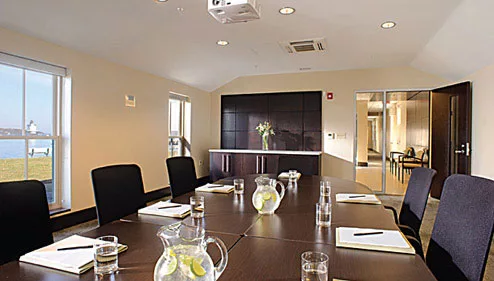
FIGURE 1. SMCC’s ventilation system allows each space to be heated or cooled independently.
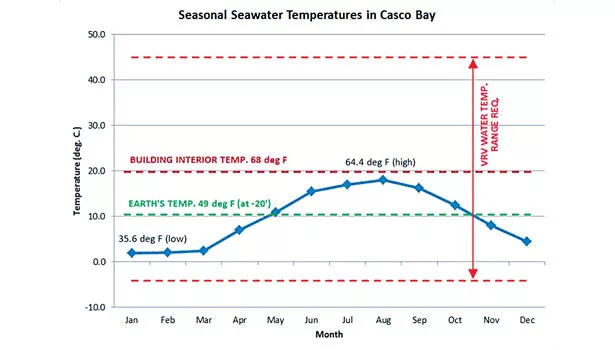
FIGURE 2. Temperature analysis shows an almost 30-degree swing from winter to summer.
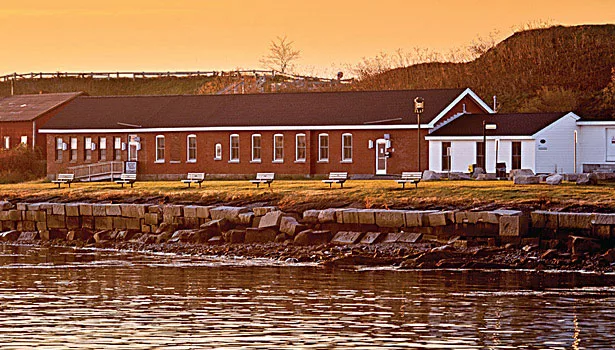
FIGURE 3. SMCC’s renovated building used the Casco Bay as an energy source for heating and cooling.
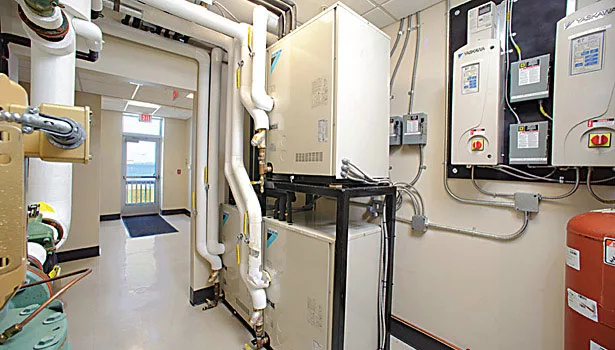
FIGURE 4. VRV compressors are used to serve the building and match instantaneous loads.
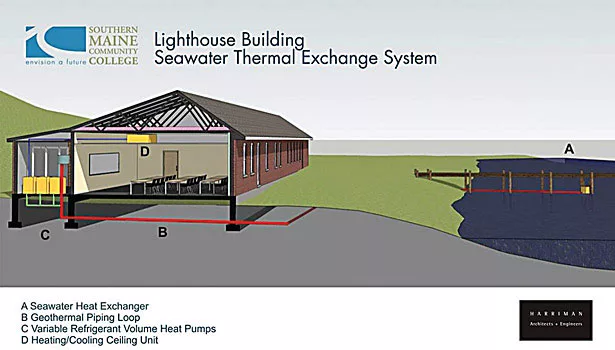
FIGURE 5. This diagram shows how SMCC was able to tap into the nearby bay for a seawater thermal exchange system.
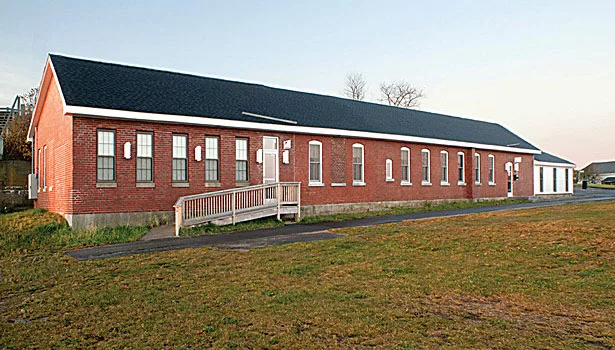
FIGURE 6. SMCC also made envelope upgrades in order to enhance building efficiency.
In its latest effort in an ongoing program to green its campus in South Portland, Southern Maine Community College (SMCC) turned to an innovative way to heat and cool one campus building: seawater.
Tapping into nearby Casco Bay, the seawater-based system uses a variable refrigerant flow (VRF) configuration with geothermal heat pumps to heat and cool the 3,250-sq-ft Lighthouse Building, which houses the school’s arts program and offices for The Foundation for Maine’s Community Colleges.
When the project to convert SMCC’s Museum Building to an academic building began, discussions explored ways to come up with a different HVAC system that would not only use local resources but would also conserve the college’s operating funds. Since the former Museum Building was sited only a few hundred feet from an existing pier, the idea was raised that perhaps seawater could somehow be used to provide heating and cooling for the renovated building.
Roadblocks
Initial roadblocks to using seawater were to find equipment that could efficiently handle the wide temperature ranges in Casco Bay and the corrosiveness of salt water. Only one heat pump model was found with a heating water temperature range of 14?F to 113?F, and this was coupled with a system used in the maritime industry — a cupronickel underwater ‘ship-keel cooler’ heat exchanger — that is highly resistant to saltwater corrosion. On ships, the heat exchanger is used to reject heat, but here, it is used to both extract and reject heat from/to the sea.
Finding equipment
Many geothermal systems use the ground as an energy source to either heat or cool a building. In this case, the demand was slightly different, in that we were not using the ground with a constant year-round temperature of 45-50? F. Casco Bay seawater has a seasonal temperature range from a low of 35.6?F to a high of 64.4?F. At the time, conventional ground-source geothermal heat pumps had a range of between 60? F to 110?F. This system would require a geothermal heat pump with a radically different range of operation. Fortunately, one company (Daikin) was producing such a system with a range of 24.8?F to 113?F for the heating phase.
Having determined that a system existed that could operate with the seawater temperature ranges, the project team then began to research the mechanism that would be used to access the seawater. Initially, the approach explored was to draw seawater up from under the pier and pump it after filtration underground in insulated piping into the building. Once in the building, it would pass through a titanium plate-and-frame heat exchanger and then return to the sea under the pier.
We contacted specialists in Japan that deal with seawater pumping, along with a California firm to locate filters and strainers for the system. Once we had the pumps, filters, strainers, heat exchanger, and insulated piping systems selected, we approached the EPA for their review. Such a system had never been seen before and it would “take time” for them to study the design and make a determination as to whether it needed more study, some field testing, or perhaps a presentation to answer their questions.
SMCC wanted the building to be renovated and occupied within a specific timeframe. A delay for potential “study” and “field testing” was not acceptable, and we realized that another method of heat transfer had to be found.
We had worked on a few prior projects involving seawater. The most sensitive portion of the heat exchange system was always the passage of seawater through the piping, pumps, and heat exchangers. Thinking outside the box, we then said that if we could not bring the seawater from below the pier up to our heat exchanger for our cooling and heating system, why not take the heat exchanger down under the pier to the seawater?
Working with a Michigan manufacturer of underwater heat exchangers for use on ships, our engineers settled upon the optimum size for the heat exchanger as well as the best possible metal alloys to reduce any colonization of the heat exchanger by sea creatures. Cupronickel was chosen. Once this design was finalized, we contacted EPA again. We were given relatively quickly the go-ahead to proceed with our design for SMCC’s seawater geothermal heating and cooling system.
Having modeled the building using Trane Trace 700, we were able to select the properly sized system and have that confirmed by the Michigan manufacturer. The decision was made to use a heat recovery system to both save energy and allow each space to be individually controlled with respect to either heating or cooling.
SMCC’s design
In the SMCC system, the same basic process is used that occurs in a household refrigerator. The ‘refrigeration’ equipment removes the heat from the seawater via the heat exchanger at varying temperatures, rejecting it to the occupied spaces of the building. How much easier this must be with seawater that is warmer than the inside of a refrigerator freezer. So, too, when we wish to cool the building, we can move heat from the building to the seawater heat exchanger by ‘reversing’ the path of the refrigerant in the compressors.
The concept is similar to geothermal systems but with a much colder resource and without the drilling expense. The cupronickel heat exchangers are located under a nearby dock and positioned 3 ft below low tide. An uninsulated pipe loops between the heat exchanger and the building. Running the pipes under the ground — an added geothermal source — eliminated the cost of insulated piping. The pipe is filled with 50% food-grade propylene/glycol, with inline pumps moving the liquid at 75 gpm.
By not insulating the HDPE piping that was buried and running it from the building to the pier, we further increased our geothermal link. The short lengths of piping below the pier were left uninsulated, as the energy lost by not insulating them was considered insignificant. The EPA also required that we monitor the pressure in the glycol/water loop and that if that pressure were ever to drop, isolation valves would close and the pumps would shut down to minimize any leakage of propylene glycol into the bay.
One 8-ton and two 6-ton VRV compressors — essentially geothermal heat pumps — serve the building using 16 evaporators. The ventilation air is ducted directly to the evaporators for conditioning prior to introduction into the spaces, allowing each space to be heated or cooled independently. Each of the VRV compressors cover one-third of the building. The VRVs with their VFDs can operate their compressors to exactly match the instantaneous loads in either a cooling, heating, or just energy movement functions.
Branch selector boxes make this a heat recovery VRV as opposed to a heat pump VRV. With heat pump systems, the entire building is either in a heating or cooling mode. With heat recovery, each individual evaporator can either cool or heat totally independent of one another. Spaces are either heated or cooled by the evaporation units, or energy can be ‘moved’ from one space to another.
With the envelope of the building brought up to modern standards with new windows and doors, the roof and walls insulated with spray-foam, a new sprinkler system, plumbing and electrical systems installed, the seawater geothermal system has provided SMCC in their now renamed Lighthouse Building with a very comfortable and highly efficient building.
Benefits
Environmental hurdles were overcome to permit this adaptive and extremely energy efficient technology at SMCC. It is environmentally friendly, uses no fossil fuels, and releases no byproducts. The Lighthouse Building uses only electricity to move energy via the geothermal heat pumps.
Before the system was installed the building consumed 2,000 gallons of oil annually for heating, and there was no installed air conditioning. Compared to a conventional oil-fired heating/direct expansion cooling system, the new set-up reduces heating costs by 33% and cooling costs by 27%. Ocean water has proven to be an amazing source of potential heat even during winter months. In the 24 months since the system has been in operation, the college has seen a $10,600 savings in energy costs annually.
While the system cost $84,000 more than a conventional HVAC configuration (fossil fueled heating and DX cooling), its reduced operating costs and no oil fuel cost produces a payback period of less than eight years.
Other sustainable measures
In renovating the Lighthouse Building, the walls were insulated with sprayed foam with an R-value of 16.2, highly efficient windows were installed, and 6 in of sprayed foam insulation was added to the roof for an R-value of 32.4. All these measures helped reduce system costs.
SMCC, located in South Portland, established the Sustainability and Energy Alternatives Center (SEA), the centerpiece of initiatives to drive sustainability. The seawater HVAC system is just one example that has emerged from this initiative and has made SMCC a leader of first-use sustainable technology in the college world.
Looking for a reprint of this article?
From high-res PDFs to custom plaques, order your copy today!


