Bridging Schools And Eras with HVAC
With literal and figurative tight spaces handled, now new boilers, hydronics, pumping systems, and DDC all work together to impress and serve.
In today’s world, so-called “high-performance, sustainable” facilities are a dime a dozen. But many of these buildings rely on overly complex mechanical systems to carry out their mission. While these systems may meet design requirements, they routinely fall short of performance expectations — a direct result of the mismatch between elaborate systems and the often-limited resources of the facilities personnel expected to operate them.
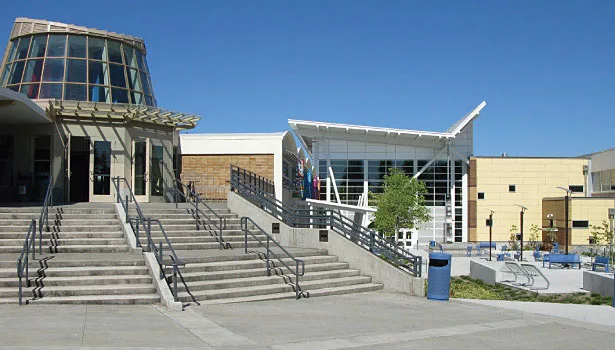
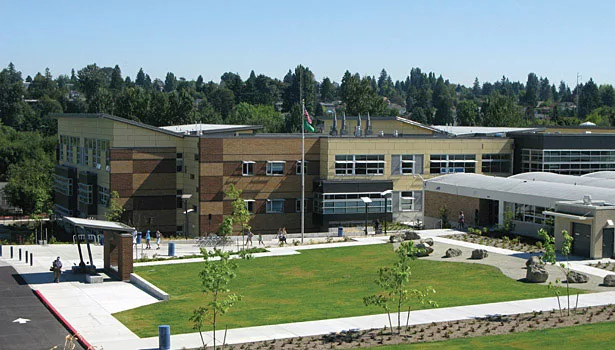
When Wood Harbinger took on the mechanical engineering design for the renovation of Seattle’s iconic Chief Sealth International High School, it faced a number of challenges. Not only would the design firm need to honor the design of a beloved school that had educated generations of Seattleites, but it would be creating a sustainable heating that would also support a new Denny Middle School on the same campus. By joining skill with a good deal of creativity, Wood Harbinger delivered a system that is easy to maintain and drastically improves energy efficiency.
Built across the street from each other in the 1950s, Chief Sealth High School and Denny Middle School were in desperate need of a makeover. A Building Excellence III capital levy, approved by Seattle voters in 2007, kicked off plans to completely renovate the existing high school, demolish and rebuild the existing middle school, and locate the two schools onto one shared campus. The high school opened in the fall of 2010, with the middle school coming online at the start of the following school year.
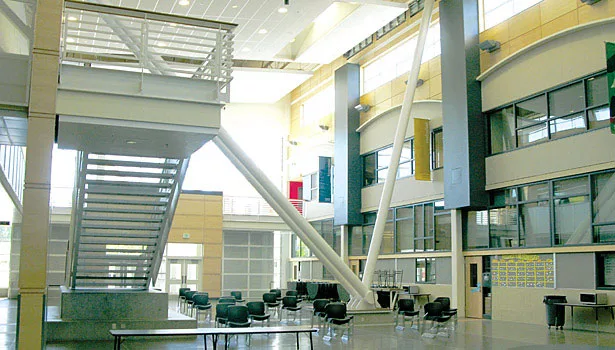
The new design connects the 230,000-sq-ft high school and 130,000-sq-ft middle school via a naturally ventilated 13,000-sq-ft galleria/commons structure. Wood Harbinger’s scope of mechanical design work included new energy-efficient boiler and pumping systems, radiant floor heating, and a tightly controlled DDC system — all of which combined to slash energy use and reduce operational costs.
A NEW BOILER STRATEGY FOR THE TEAM
Before the existing high school could be renovated, the central plant had to be relocated. The existing dual-fueled gas and oil-fired, firetube steam boilers were decommissioned and removed; they had heated the main building and gymnasium via steam delivered underground. Crews installed a new hydronic heating piping system including pumps with VFDs. By varying the flow with the pump VFDs, the system continually adjusts to the building load.
The new systems were located in the only space available: across the plaza in the basement of the existing gymnasium. The team installed five new high-efficiency, AERCO, downdraft, stainless steel condensing boilers in a long, narrow space that had previously been used as storage. Space constraints meant the exhaust flues for the new boilers would be located in this same area. Crews made sure the boiler exhaust would not be interfering with the air intake ductwork for the building itself. Collocating the systems was a challenge, but ultimately minimized the amount of ductwork needed and lowered the costs associated with separating the two.
This project was the first in the district to go with condensing boilers, and the decision to use condensing boilers was not a simple process.
The district had established an energy conservation mandate the prior year to save energy and be as efficient as possible. For example, all new schools prior to this had included air conditioning. As noted, this project was one of the first to have none, except in critical spaces such as MDF rooms and dimmer rooms serving the stage lighting.
The condensing boilers, flow system, and control schemes were completely new to the district maintenance staff and they were expectedly cautious. One of their primary concerns was a scenario in which the DDC would be controlling other built-in equipment control functions and those functions would not be transparent to the control logic of the DDC system. With their input and several meetings with them, equipment reps and controls vendors, the decision was made to proceed.
When the system was initially installed and started, it appeared the staff’s concerns might have been confirmed. However, with diligent commissioning and tuning of the boiler’s control system in conjunction with the DDC system, the fears have been put to rest and the staff is happy with the overall system functionality.
MORE EQUIPMENT IN TIGHT SPACES
Limited space required the mechanical team to get creative elsewhere in the building as well. Existing tunnels that ran beneath the old high school were used to run piping throughout the building. At less than four feet high, the tunnels were cramped and standing upright was out of the question. Contractors used skateboards to quickly shuttle supplies and piping through the otherwise un-navigable space. In addition, pre-insulated steel piping was direct buried between the boiler room in the gymnasium’s basement back over to the existing high school structure.
The nature of new construction meant the design and installation of mechanical systems in the new middle school building presented fewer complications. Crews installed vertical fancoil units in the classrooms (the same systems used in the high school). Separate AHUs serve the office, gym, locker rooms, music rooms, and kitchen.
Designed to accommodate the new systems from the start, all ductwork and piping was run above ground, eliminating time consuming and complicated tunneling. However, balancing the shared systems during the phased construction work required constant attention. The hot water heating system had to operate for the gym as well as the main high school building while the middle school was being built. The high school operated a full year while the middle school was under construction. Once the middle school was finished, it was brought online and the entire mechanical system was rebalanced to incorporate the new space. The same mechanical contractor — Design Air of Kent, WA — won the bid for both the high school and middle school, simplifying logistics and allowing crews to build upon lessons learned.
As with most renovations, locating new mechanical ductwork into existing spaces presents considerable challenges. The mechanical team had to consider not only the operating efficiencies of mechanical systems but also their footprint in order to ensure everything fit in place. The existing high school classrooms were smaller than typical school classrooms with low curved ceilings, which reflected the roof structure. This meant using ceiling space to locate ductwork, and fans were out of the question. The team decided to use floor-mounted fancoil units located in classrooms closets. A mock-up of a typical classroom and the units was made beforehand to ensure a proper fit. Noise testing by the acoustical consultant and supplier determined the need for sound deadening material in the closets to reduce the noise of the fans.
OPTIMIZING ENERGY USE
Construction of the Chief Sealth International High School/Denny Middle School project followed Washington Sustainable Schools Protocol, (WSSP), which emphasizes minimizing energy use. The Washington State Legislature requires all publically funded buildings to be LEED® Silver certified. However, WSSP was created by the legislature for Washington public schools in order to save the cost and time dealing with LEED certification. The WSSP is a similar process to the LEED protocol, without certification. Much of the building material from demolished structures on site, such as the old gymnasium bleachers, was reused in the new and renovated facilities for seating and handrails. Single-pane glass was replaced with energy-efficient glazing, and insulation was placed where often none existed before. Wood Harbinger’s mechanical design contributed to the sustainability and energy efficiency of the project.
The two schools are among the Seattle School District’s first to eliminate A/C systems, saving an estimated 1,200 tons of refrigeration equipment and upwards of $1 million in associated costs. The galleria/commons area was designed using natural ventilation and radiant floor heating. Classrooms were provided with ceiling fans to increase airflow on warm days. Variable-speed pumping was used in the heating hot water system, which allows the owner to monitor and stage the pump for minimum energy usage, saving on energy costs.
A DDC system was put in place at both schools, which keeps the temperature at a steady 68° and eliminates occupant-controlled heating and cooling spikes.
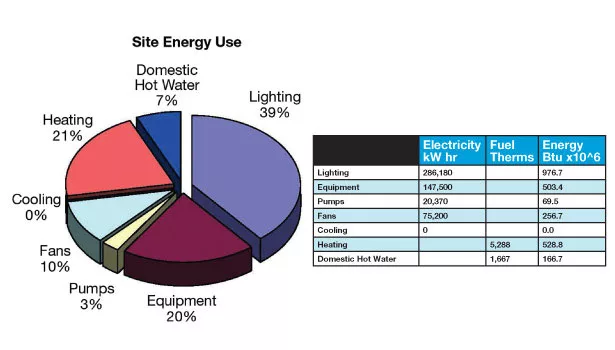
Combined with considerable structural and envelope improvements, the new mechanical systems have helped the campus reduce energy consumption by an astounding 74% over the previous year of operation of both old schools combined.
During the decision-making process to combine the schools into one campus, the school district held many public meetings for community and user feedback. Overall, the community was excited about tearing down the old facility and adjoining pool, which would be renovated later. However, that wasn’t the case for the school community. The knowledge of students receiving a brand new state-of the art facility should make any parent thrilled. However, there were very serious concerns on the part of parents about combining middle school and high school students onto one campus. Interestingly, parents from the middle school weren’t the ones expressing the most concern; it was the high school parents.
To address this issue, the schools are connected via the galleria, linking the two spaces together but physically still separating them with overlapping programs having the capability to mingle as needed. Making the decision to install high-efficiency boilers, pumping system, and HVAC system was simple when compared to the programming and combining required to incorporate the two schools onto one campus. The district and design team worked diligently to accommodate the concerns of the end users, resulting in a very successful project.
Even with the initial resistance by some in the community, the verdict now that the schools have been fully occupied for more than a year is favorable. A post-occupancy evaluation showed that the district was pleased with the speed and efficiency of the condensing boilers, and the students are enjoying the new, modern facilities.
The final grade: A+.
Looking for a reprint of this article?
From high-res PDFs to custom plaques, order your copy today!