MAXON - How To Enhance Loss Prevention With Shutoff Valves

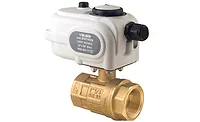
FIGURE 1 An NFPA 86-COMPLIANT
double-block arrangement, properly installed with Maxon safety
shutoff valves for use in a three-zone heater.
Test and protect the piece so important you probably need two of them.
Now that the industrial economy seems to be recovering, many positive trends are leading the news: productivity is up, capacity utilization is improving, and corporate profits are healthier. Industrial manufacturers are on the rebound, and order levels are getting stronger.
Unfortunately, some less positive trends are also being exposed: workforces are increasingly thin, the average experience level of workers has fallen, and all the while, the average age of capital equipment is increasing. Left unchecked, these negative trends can magnify a company’s liability and risk associated with boilers or with processing equipment such as ovens, dryers, and heaters.
In every fuel-fired heating device, an array of safety devices works in combination with the burner to produce safe, reliable heat. After the flame safeguard relay, perhaps the single most important safety device on a combustion system is the shutoff valve.
CRITICAL AND IN THE CODE
The purpose of a shutoff valve is to immediately (i.e., in less than one second) interrupt the supply of fuel to a burner when the control system requires an “off” condition. The cause may be a loss of flame, a loss of a safety permissive, or simply a “power off” condition on the boiler or other heating equipment.Shutoff valves earn their “most important device” designation because they serve a function not unlike a parachute in a combustion system. For this reason, most codes require two valves for redundant safety depending upon the burner size and application.
The use of shutoff valves is governed by NFPA, CSA, IRI, FM, UL, and a wide variety of regional and industrial codes. Make sure you understand the applicable codes and standards for your location, for your industry, and for your insurance provider. Additionally, make sure your system is properly applied with regard to NEMA rating, area classification, pressure rating, and valve trim.
Remember, too, that education prevents accidents. For any employee who operates or maintains boilers and other combustion systems, provide some degree of basic training on shutoff valves for identification, for operation, and for maintenance. Damaged or bypassed shutoff valves are common when untrained employees are charged with operating or maintaining heating equipment.
HOW TO CHECK
The durability of most shutoff valves offered today is exceptional. However, some codes require annual inspections and leak tests. Minimize your company’s risk by performing and documenting these important checks and making it part of a continuing maintenance program.Regular partial stroke testing is one convenient method of checking for proper valve operation without time-consuming and costly shut-down periods.
Then create a documented, repeating inspection and maintenance program to provide an optimal level of loss prevention with shut off valves.
When functional checks or leak checks expose weak or slow shutoff valves, replace the valve, but don’t shop on price alone. There is no such thing as a “bargain parachute.” Cheaper usually means less reliable, or a valve that will provide a shorter service life. TB
Maxon - a Honeywell company. For more information, visit www.maxoncorp.com
Looking for a reprint of this article?
From high-res PDFs to custom plaques, order your copy today!