APPS
ICT Tracker co-founder, David Francis, on using technology to drive your company’s innovation.
Who is your ‘Technology Champion?’
After 30 years in construction, I have had a lot of different roles that allowed me to see technology used from a lot of different perspectives. I am a big believer in mentors and keeping your eyes open to knowledge as it can comes from anyone at any time. My roles in management exposed me to the importance of company integration and knocking down silos with various groups or departments, to do what was best for the company and not just the department. In all my roles I have leaned on technology to help simplify processes feeling there was a better way to save minutes to seconds in a process. I have seen a major change over the last 10 years in how we manage construction technology and its role in success of companies.

Technology is helping to keep pace of projects and how information is captured and shared. In the early days, without approved drawings and submittals, nothing could start. Schedule accelerations now have contractors detailing, coordinating, fabricating, and installing while the design team is pushed to kick out a complete design, while equipment and material submittals have yet to be finalized or approved. Everyone talks lean, but this is the antithesis to the lean approach of pull planning. This dynamic construction trend of “design assist” forces contractors to take on the liability as design architect/engineers and are time crunched to spit out shop drawings before they have been thoroughly coordinated or reviewed by QC before fabrication and installation. Without technology no one could keep up with this current trend.
BIM is an important technology, with a lot of definitions and uses. BIM makes sense on certain projects, yet it is not a “silver bullet” and BIM tends to be a bit overused in situations where the information is just not stable enough to make good decisions. Some items should be field run and coordinated, due to schedule and lack of information, yet there is a contractual requirement for BIM and coordination. BIM brings value to all levels of development within construction, yet we struggle with integrating the most powerful feature which is the “I” in BIM, the information. The modeling side of BIM is very dynamic, but due to lack of finalized information, complete or reliable model data is an issue. Contractual language has also created a liability barrier from design to construction with inconsistency on BIM Execution Plans. A final issue with BIM is that it may be perfect on the computer screen, people do not always allow for jobsite tolerances due to product or the human factor of installation.
You can teach a field person CAD, but it takes longer to teach a CAD person the field. Experience in the field or shop makes a huge difference on training people to create virtual layouts of construction elements. Lack of qualified modelers is a barrier to success for many contractors who are competing with high demand for good modelers at all levels. Outsourcing is a viable option but requires oversight by internal QC to verify the model follows company standards and expectations.
We are experiencing a shift in how field teams react to technology, as they get a lot more tech savvy with each new generation of workers. They realize the benefits of leveraging technology to streamline their jobs and projects. The role of technology in construction has many opportunities, but a big item that benefits all stakeholders is the ability to visualize elements in space, coordinate, document and identify alternative options to find the best solution. They need to achieve the lowest installed cost, key word installed – NOT cost of equipment or material. As an example, prefab and modular construction continues to grow and have an impact on construction with the number one improved benefit - safety. Prefab technology helps keep our workers in a safe controlled shop environment vs. the jobsite, while improving the speed at which construction elements are fabricated and installed. This use of prefabrication also allows contractors to benefit from lean construction philosophy of providing more value and eliminating waste by developing repeatable prefabricated units whenever possible.
Companies that invest in technology recognize that it’s about streamlining an existing process. Technology comes in all forms with safety equipment, tools, processes, etc ... Investing and implementing technology solutions can be difficult for some companies to visualize the cost benefit. It is not tactile like grabbing a tool or seeing construction elements installed in place. Companies need to identify a “technology champion” who understands the expectations and can oversee the implementation of a process making sure its success. Companies need to realize the technology cost is probably the least expense and need to acknowledge the greater cost will be customizing and implementing the technology, while training their workforce to gain the full benefits and the ROI expected.
Understand your tech\nology objectives and record them. Make sure the ease of the implementation is at the top of your list and you understand it is rare anything works right out of the box. No two contractors work the same. Without understanding the whole process, the adoption of the technology and ability to see it in action with a positive ROI will be elusive.
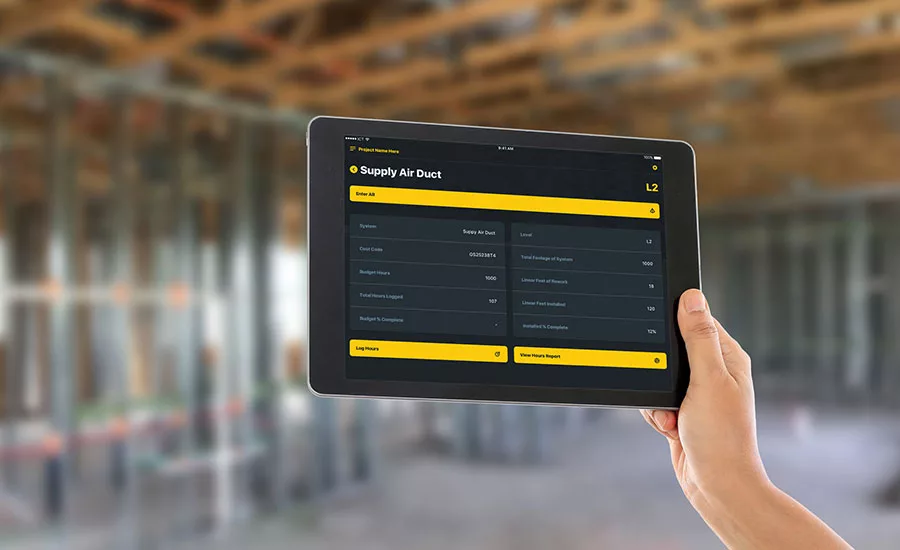
David Francis is the co-founder and CTO of ICT Tracker — a user-friendly software that monitors construction site progress in real-time by utilizing the power of augmented reality to provide updates and reporting. He has years of hands-on expertise managing MEP Design/Build construction projects, and he serves as national chairman for the Associated General Contractors of America BIM Forum MEP Group and the MEP group lead on the LOD Specification committee.
This story originally appeared in the September 2019 issue of SNIPS magazine.
Looking for a reprint of this article?
From high-res PDFs to custom plaques, order your copy today!