A new, energy-efficient duct material is gaining favor, some say
A shift may be under way ductwork fabrication and commercial and industrial HVAC construction.
In some uses, phenolic pre-insulated ducts are replacing those fabricated with galvanized sheet metal.
|
SMACNA publishes related standard for material The new SMACNA-ANSI standard for phenolic ductwork contains instructions, tables, and details intended to provide a basic phenolic pre-insulated duct fabrication and installation standard for the construction industry. The new standard is available as a downloadable PDF, in book form or on a CD. SMACNA included industry experts as advisers during the formulation of the new standard. It includes model project specifications and duct performance characteristics, as well as information on closures, fittings and connections, reinforcement procedures, hangers and supports, accessories, and an inspection checklist. The standard is applicable for ducts up to 80- by 80 inches in size that operate to 4 inches water-gauge positive pressure class and to 3 inches water gauge negative pressure class. More information on the standard is available here. |
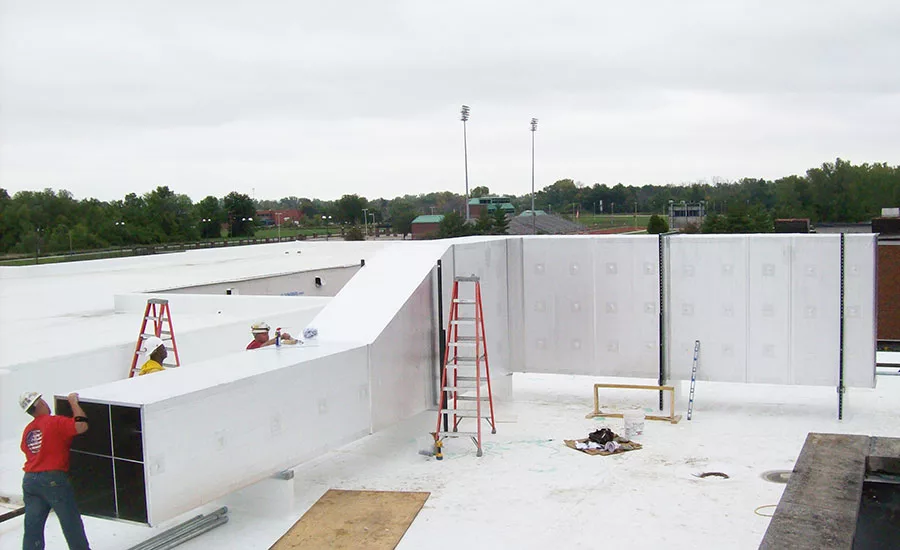
Phenolic ductwork is constructed from a rigid, thermoset, closed-cell panels, which comprise a fiber-free insulation core with a factory-applied reinforced aluminum foil facing on both sides. This insulation technology has a far lower thermal conductivity than fiberglass, its makers say, allowing thinner insulation to achieve the desired thermal performance. Its R-value is determined by the thickness used: 7/8 inches equals R-6, 1 3/16 inches equals R-8.1.
This pre-insulated ductwork is generating a lot of HVAC market attention because of the many ways it answers the challenges of modern building philosophies, manufacturers say. The Sheet Metal and Air-Conditioning Contractors’ National Association published its first standards for phenolic duct in May. These have also been approved by the American National Standards Institute.
No change
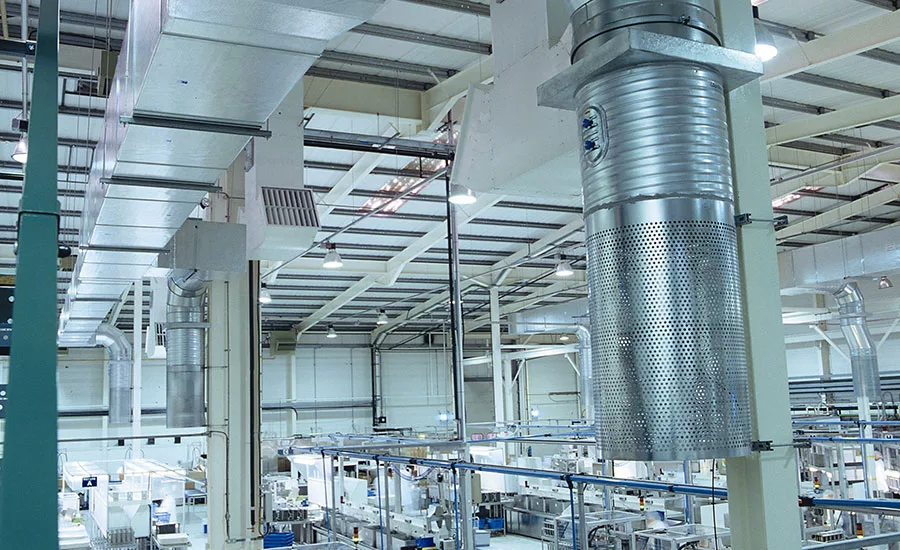
Ductwork used in HVAC construction has changed very little since the early 20th century. But modern building codes and requirements stress energy conservation and green HVAC is now at the forefront of building design programs. Clean-air requirements and maximizing available floor space have become key elements in the construction of commercial and industrial buildings.
For the past century, most ductwork fabrication has been done with galvanized sheet metal. Rectangular ducts were usually fabricated in specialized sheet metal works shops to fit each building’s needs. Due to the weight of the metal, they were manufactured in 5-foot sections to make it possible for them to be carried by workers.
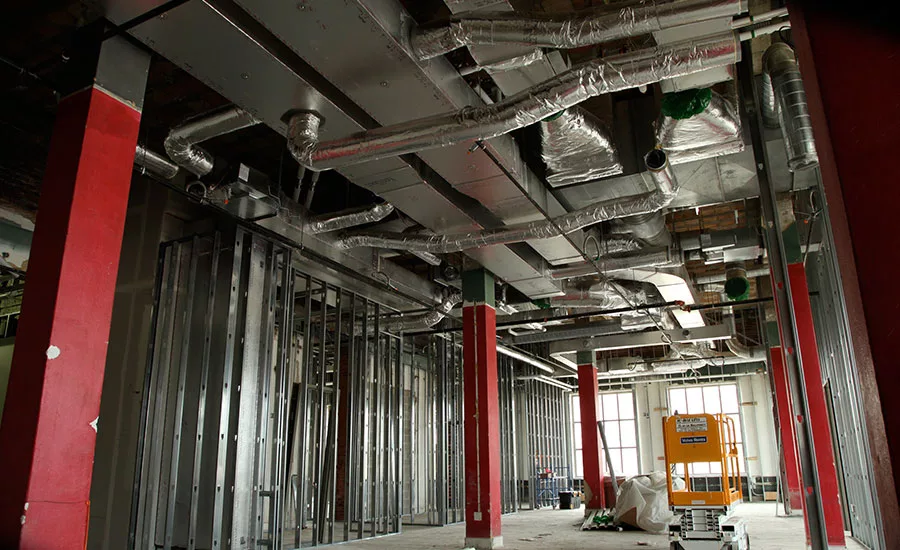
Insulation was typically added after the duct was assembled. Some metal ducts were fitted with interior fiberglass duct liner or wrapped externally with fiberglass duct wrap. For certain types of systems, a double-walled duct had to be installed.
Now that traditional fabrication and insulation method is being replaced with phenolic pre-insulated ductwork in certain situations. Makers of phenolic ductwork say it can reduce air leakage by up to 79 percent and reduce HVAC market energy and carbon dioxide emissions.
Phenolic pre-insulated ductwork, as part of a green HVAC system, can contribute to points under the U.S. Green Building Council’s Leadership in Energy and Environmental Design building rating program.
At least one phenolic pre-insulated ductwork system is listed as a Class 1 product under Underwriters Laboratories’ U.L. 181 fire-resistance safety standards. Conventional sheet metal products do not have this rating, supporters point out.
Saved steps
Pre-insulated ductwork does not require wrapping insulation after the duct is hung. Indoor air quality is improved because phenolic pre-insulated ductwork has a non-fibrous insulation core and air flows over fiber-free surfaces. This minimizes the risk of loose fibers entering the air-distribution system. Phenolic pre-insulated duct panels are also odorless and resistant to fungal and mold growth.
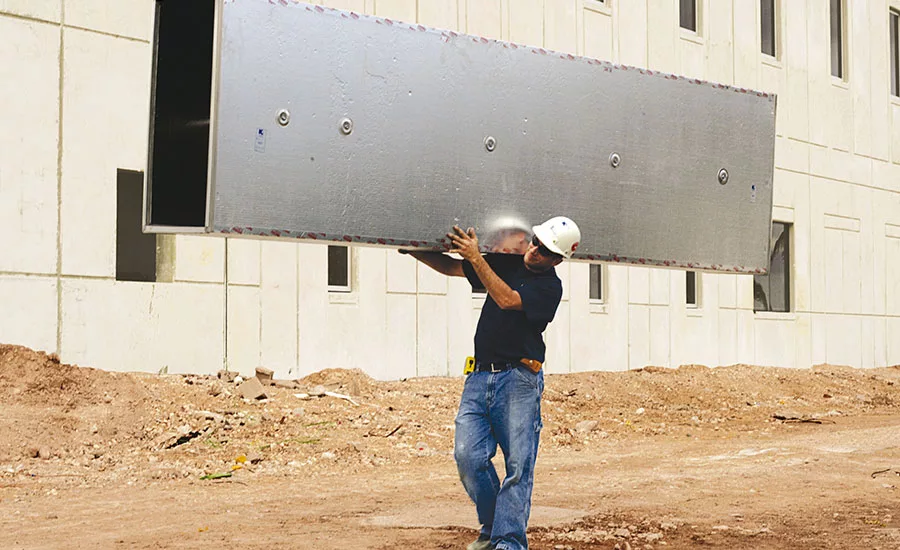
The amount of time needed to install a complete pre-insulated duct system is far less than with sheet metal, supporters say. Pre-insulated duct systems can weigh up to 72 percent less than galvanized sheet metal insulated with a fiberglass wrap. Because they are much lighter in weight, ductwork sections can be up to 13 feet in length, further helping reduce installation time.
That easier installation process also reduces on-site labor and handling costs. Ancillary costs are also lower than with a galvanized sheet metal forming system because standard sheet metal works ducts require more hangers spaced closer together, while phenolic pre-insulated ducts can have hangers spaced as far apart as 13 feet.
In fact, several sections can be joined together at floor level before being installed. Another installation benefit is that phenolic pre-insulated ductwork can be installed flush with the ceiling, which can save 6 to 8 inches of space.
Considering that energy costs are, on average, 40 percent of a building’s maintenance expenses, the installation of a phenolic HVAC construction duct system could greatly help reduce initial construction capital costs, supporters of the technology say.
The term “whole life cost” refers to the total expenditure needed for a structure over its expected service term. A building constructed with future efficiency expectations will generate income through energy savings and reduced maintenance costs as well.
When the benefits of these lower operating costs are factored in over the span of 30 years of service life, installing a phenolic pre-insulated ductwork system could add even more value to an owner’s investment, manufacturers say.
This article and its images were supplied by Kingspan Insulation LLC, a manufacturer of energy efficiency and moisture management products, including the pre-insulated, phenolic Kingspan KoolDuct system.
Looking for a reprint of this article?
From high-res PDFs to custom plaques, order your copy today!


