ACHR News
search
Ask ACHR NEWS AI
cart
facebook twitter instagram linkedin youtube
  • Sign In
  • Subscribe
  • Sign Out
  • My Account
ACHR News
  • NEWS
    • Breaking News
    • New HVAC Products
    • Featured Products
    • Manufacturer Reports
    • HVAC Data
    • Legislation
    • ACHR NEWS Centennial
  • RESIDENTIAL
    • Air Conditioners
    • Furnaces
    • Residential Heat Pumps
    • Ductless
    • Residential IAQ
    • Testing, Monitoring, Tools
    • Components & Accessories
  • COMMERCIAL
    • Air Handlers
    • Rooftop Units
    • Chillers and Cooling Towers
    • Commercial Heat Pumps
    • Boilers and Hydronics
    • VRF/Ductless
    • Commercial IAQ
  • REFRIGERATION
    • Refrigerants
    • Refrigerant Regulations
    • Leak Management
  • CONTRACTOR PRO
    • Geothermal
    • Homeowner Study
    • VRF and VRV Ductless
    • Unitary Trends
  • EDUCATION
    • Training and Education
    • Business Management
    • Service and Maintenance
    • Continuing Education
    • Market Research >
      • HVAC Brand Awareness Report
      • VRV, VRF, VRVZ Report
      • Unitary Trends Report
      • Water Heat Professionals Report
    • Webinars
    • Sponsor Insights
    • eProducts Info
    • White Papers
  • EVENTS
    • HVAC Contractor Forum
    • Industry Events and Webinars
  • MEDIA
    • Videos
    • AHR Expo 2025 Videos
    • Podcasts >
      • ACHR News Podcast
      • HARDI Podcasts
      • AHR Expo Podcasts
      • ACCA Podcasts
    • Interactive Spotlights
    • Quizzes
    • eBooks
    • HVAC Talkback
  • HVAC GROUP
    • ACHR NEWS >
      • Current Issue
      • Digital Edition
      • Subscribe
    • Distribution Trends
    • SNIPS NEWS >
      • Join SNIPS NEWS
    • Engineered Systems News >
      • Join ES News
    • HVACR Directory
    • Contests
    • Newsletters
    • Contact
    • Advertise
    • My Account
HVAC ContractingTechnical

Measuring Duct System Performance
September 4, 2006
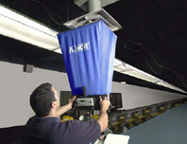
Digital capture hood measuring a supply diffuser.

Measuring Air Velocity and Air Volume at Supply Grilles/Diffusers

Supply flow into an occupied space is generally a mixture of return air and fresh outdoor air that has been filtered and then conditioned through heating or cooling coils. This volume of supply air will become entrained with the room air at a known rate in order to achieve occupant comfort by providing sufficient volume flow to satisfy the number of occupants in a given space. The flow rate requirements for a room or building, and the percentage of outdoor air versus return air being delivered will vary depending on the principle purpose of the facility.

It is very important to verify proper manual and automatic control of an HVAC air system. A balanced supply and exhaust will help ensure sufficient ventilation by meeting minimum air exchange rates, removing airborne contaminants which can affect air quality, and reducing operating costs. The supply flow for an area may also affect the room pressurization in relation to an adjacent room or hallway, which can cause drafts or difficulty opening and closing doors.

Capture hoods, rotating vanes, and thermal anemometers are the most common choices used to verify proper minimum flow rates; confirm proper operation of dampers, controls, and fans; and ensure the efficient use of energy.

Capture hoods are popular instruments to use for measuring flow rates from supply grilles. Since they obtain measurements quickly, provide a direct air volume reading, are easy to use, and come with a variety of hood sizes to match various grilles, capture hoods are often the tool of choice (when measuring supply).

ASHRAE recommends performing a duct traverse to determine if a correction factor is needed for air capture hood measurements. Different diffuser styles, elbows attached directly to the diffuser, and dampers located just upstream of the diffuser can impair the uniformity of the flow patterns coming out of the diffuser and affect the hood reading. Be sure to choose the hood size that most closely matches the outlet size being measured. Many capture hoods on the market today include an Ak-factor function.

Utilizing these instruments effectively can help you ensure the proper balance of mechanical HVAC system supply airflows.

Rotating vane measuring an outlet.

Nonuniform Flow Corrections

Using a capture hood on a supply opening with no diffuser or deflecting vanes may not provide accurate results due to a nonuniform air pattern and jet effects. Capture hoods are generally calibrated on a wind tunnel with a 2 x 2 ft (61 x 61 cm) hood attached to a diffuser or grille. The diffuser or grille spreads out the airflow and the capture hood will see more uniform flow. Other instruments are often used instead of capture hoods for nonuniform air flow applications.

Other suitable instrument types for this application include rotating vane, thermal anemometer, velocity matrix, and swinging-vane anemometers.

Measuring air velocities at a supply opening is easily accomplished when no grille or louvers cover the opening. Divide the opening into sections of equal area and take a measurement in each section. Instruments used for this application can be a rotating vane anemometer, velocity matrix, deflecting vane anemometer, or thermo-anemometer. Add the readings and divide the sum by the total number of readings to determine the average.

Looking for quick answers on air conditioning, heating and refrigeration topics? Try Ask ACHR NEWS, our new smart AI search tool. Ask ACHR NEWS →

Diffuser measurement using a diffuser probe and deflecting vane anemometer.

If the supply opening is covered with a simple grille which provides at least 70 percent free opening and there are no turning vanes, a rotating vane anemometer is a common choice. The best procedure is to divide the grille into equal areas and to take a reading at each grille section for at least 30 seconds for a mechanical instrument and 10 to 15 seconds for a digital instrument. The rotating vane anemometer will average the velocity during this timing interval, giving a more stable result. However, the lower the velocity, the longer it may take for the vane to stabilize.

A velocity matrix provides a larger measurement area, reducing the total number of samples resulting in quicker measurements. The velocity matrix can be used on a supply opening with no grille or louvers, but may not be the best choice if there are turbulent airflows. They can cause some turbulent air patterns which could affect the averaging function of the grid pressures.

Velocity matrix measuring face velocity of an HVAC filter.

Many diffuser manufacturers have established Ak-factors and procedures applicable to their outlets for correcting measurements taken with a deflecting vane anemometer equipped with diffuser probe. Probe positioning performed in the same manner as was done in the laboratory is critical in achieving reliable measurements in the field using this technique. The flow rate is determined by multiplying the diffuser manufacturer's Ak-factor by the average velocity in fpm (m/s) to obtain cfm (m3/h).

Q = Ak x V

Where:
Q = flow rate in cfm (m3/h)
Ak = outlet manufacturer's correction factor
V = average velocity in fpm (m/s)

Since the introduction of the capture hood, the deflecting vane measurement has become less prevalent. It is a good option for low flow applications.

Duct static pressure measurement. (Click on the graphic for an enlarged view.)

Static Pressure Measurement

Static pressure measurements are an important method of determining system operating efficiency and identifying problems such as leaky ducts, clogged filters and coils, and blocked inlets. Any of these can negatively affect occupant comfort and system operating efficiency, which can waste significant utility dollars. Unnecessary increased loads on fans and other system components can cause premature wear and untimely failure, resulting in increased maintenance costs.

Static pressures in air distribution ducts can be measured using a digital micromanometer, incline manometer, or deflecting vane anemometer with static pressure probe. A digital micromanometer or incline manometer can use the standard "L-shaped" pitot probe with a hose connected from the positive port of the manometer to the static pressure leg of the pitot probe. The total pressure leg of the pitot probe and the negative port of the manometer would be open to the atmosphere.

Capture hood measuring a restroom exhaust.

Exhaust Grille Measurements

To adequately balance a mechanical HVAC system, it is necessary to also verify exhaust flows. Instruments such as a capture hood, rotating vane, or velocity matrix are common choices to measure exhaust flows.

Capture hoods calibrated for exhaust mode can be used on return grilles without an Ak-factor. For the best accuracy, choose the hood that most closely matches the outlet size being measured and set the hood to exhaust or return mode. Also, as with supply diffusers, an alternate means of measuring flow (such as a duct traverse) is advised when determining if a correction factor needs to be applied to the hood readout.

Rotating vanes can be used on return grilles provided the vanes of the grille are straight with no deflection. Place the rotating vane approximately 1 to 2 inches (2.5 to 50 cm) away from the grille and divide the face of the grille into equal areas with the vane head taking a measurement in each location. The readings should be added and the sum divided by the total number of readings to obtain an average velocity. The average velocity can be multiplied by the free area of the grille in square feet (square meters) to obtain a cfm (m3/h) volumetric value. Rotating vanes are a good alternative if the grille is too small or too large to accommodate a capture hood.

A velocity matrix is a good choice for large return grilles with high flow rates that a capture hood cannot accommodate. The face of the return grille should be divided into sections and the velocity matrix placed in each section to obtain a reading. These readings should be added and then divided by the total number of readings to produce an average velocity. Stand-offs located on the corners of the velocity matrix aid in positioning the matrix for repeatable results by keeping the distance between the matrix and the grille consistent for each measurement.

If the exhaust outlet does not have a grille or louvers, divide the face into a grid pattern with equal areas. A larger number of measurement locations may be required to increase the accuracy of the average flow. Measurements can be taken in the center of each area using a velocity matrix or rotating vane anemometer. However, the blockage effect caused by the size of the instrument when placed in the air stream at the exhaust opening will vary from model to model, and the accuracy may be impaired.

Duct traverse with digital micromanometer and pitot tube.

Duct Traversing: Low to High Velocities and at High Air Temperatures

Air velocity measurements are often taken within ducts to determine flow rate. Since velocity distribution is not uniform even in the best of circumstances, a duct traverse is necessary. This involves taking a number of readings within the duct and determining average velocity.

For selecting the most appropriate technique, here are some general guidelines. If air velocity in ducts normally exceeds 1,000 fpm (5 m/s), a manometer with pitot tube, thermo-anemometer, or deflecting vane anemometer with pitot probe can be used for making these measurements. However, each instrument has its limitations and may not be applicable for all jobs.

  • If velocities are below 700 fpm (3.5 m/s), the choice of instruments would be between either the deflecting vane anemometer with pitot probe or a thermal anemometer.

  • If velocities are below 300 fpm (1.5 m/s), the thermal anemometer may be the only choice. An example is a vertical stack or flue that functions as a result of temperature differences and may contain combustion or industrial process byproducts.

  • Measuring airflow in extreme air temperatures found in chimneys or drying oven ducts will require a manometer with stainless steel pitot tube that is rated up to 1,500°F (815°C).

    Note: The manometer is not considered to be a flow through device. This means the elevated air temperature seen by the pitot tube will not pass down through the hoses to the manometer and damage components or electronics. However, if the probe is left in the high temperature airstream for extended periods, high temperatures may eventually affect the tubing connecting the manometer to the pitot tube.

    Measuring Air Velocity in Open Areas

    Air velocities (and movement) in a room or space are often felt as a draft and, depending on the intensity, can be uncomfortable to most people. Cross-drafts in areas having spray booths or lab hoods can interfere with air measurement by the permanently installed air velocity monitors on the booth or hood. These and similar situations call for an air velocity measurement in the range of 50 to 200 fpm (0.25 to 1.00 m/s).

  • Thermal anemometers are generally the first choice for accuracy, but are inappropriate for determining airflow direction. A smoke source can be used in conjunction with the thermo-anemometer to provide an indication of flow direction.

  • A deflecting vane anemometer can also be used in most open areas for measuring velocity. To obtain an accurate reading, hold the instrument in the air stream with the proper port facing upstream. If the flow direction is not known, orient the instrument in various positions until you obtain maximum deflection.

  • An air velocity transducer capable of outputting an analog signal (voltage or current) along with an omni-directional thermo-anemometer sensor can be used to measure room currents or draft over a period of time. The analog output signal can be connected to a remote datalogger to track trends in air patterns throughout the day, week, or month in order to get a better understanding of where and when room air currents are unacceptable.

    Excerpted and reprinted from the Alnor HVAC Handbook from Alnor/TSI Incorporated, Shoreview, Minn. Alnor manufactures instruments for the measurement of indoor environments including air velocity, volume, pressure, and temperature. For more information, visit www.alnor.com/REDIRECTS/DIRECTORIES/ElecAds/00001/.

    Publication date: 09/04/2006

    Links

    • Alnor
  • Share This Story

    Looking for a reprint of this article?
    From high-res PDFs to custom plaques, order your copy today!


    Recommended Content

    JOIN TODAY
    To unlock your recommendations.

    Already have an account? Sign In

    • HVAC-enrollment

      The Trades Are Back: HVACR Programs See Nearly 30% Enrollment Spike

      A new wave of future technicians is entering the pipeline.  
      Training and Education
      By: Matt Jachman
    • 2025 Top 40 Under 40

      2025 Top 40 Under 40 HVACR Professionals List

      The 11th annual Top 40 Under 40 list highlights those...
      HVAC Residential Market
      By: Hannah Belloli-Oster
    • LG Ductless Mini-Split Systems

      The 9 Types of Heat Pumps

      As the U.S. moves toward electrification, heat pumps are...
      HVAC Residential Market
      By: Joanna R. Turpin
    Subscription Center
    • Create an Account
    • Start a Subscription
    • Manage My Account
    • Sign Up for Newsletters
    • Visit Customer Service
    • Update Preferences

    More Videos

    Sponsored Content

    Sponsored Content is a special paid section where industry companies provide high quality, objective, non-commercial content around topics of interest to The News audience. All Sponsored Content is supplied by the advertising company and any opinions expressed in this article are those of the author and not necessarily reflect the views of The News or its parent company, BNP Media. Interested in participating in our Sponsored Content section? Contact your local rep!

    close
    • Piggy Bank
      Sponsored byWatercress Financial

      Energy Prices, Inflation, and HVAC: What Today’s Homeowners Care About

    • Refrigerated Food
      Sponsored bySolstice Advanced Materials

      R-455A Refrigeration: A Cold Storage Solution for the Future

    • Airex Rooftop Units
      Sponsored byAirex Manufacturing Inc

      Consolidating Roof Penetrations: A Growing Trend in Multifamily HVAC Design

    Popular Stories

    HVAC-Price-Increase-graphic

    HVAC Price Increase List: June 2026

    Refrigerants-and-gauge.jpg

    HVAC Industry Warns of Counterfeit Refrigerants Entering U.S. Supply Chain

    U.S. Supreme Court building

    95% Furnace Efficiency Rule to Get New Hearing

    Midea-training.jpg

    HVAC Workforce Crisis Expands Beyond Technicians to Instructor Shortages

    Data_Center_facility.jpg

    HVAC Manufacturers Respond to Growing Data Center Backlash

    View The ACHR NEWS
    Centennial Anniversary Timeline

    The ACHR News Timeline Chart
    Submit a Letter
    Submit a letter to our editors.

    Events

    November 6, 2025

    Next-Gen Data Center Cooling: HVAC Innovation and Real-World Solutions

    On Demand As AI workloads and high-density computing push traditional cooling methods to their limits, the data center industry is accelerating the adoption of next-generation HVAC technologies.

    June 23, 2026

    HVAC Duct Sealing Mastics: Why Selection Matters

    In this webinar we will detail what HVAC material buyers and technicians need to know when selecting duct mastics, including matching mastic to substrate, alternatives to liquid mastic, and where UL 181 Listings fit into real world installations.

    View All Submit An Event

    Poll

    Summer Staff

    Are you fully staffed for the summer season?
    View Results Poll Archive

    Products

    BNI Mechanical/Electrical Square Foot Costbook, 2026 Edition

    BNI Mechanical/Electrical Square Foot Costbook, 2026 Edition

    See More Products
    HVAC Duct Sealing Mastics: Why Selection Matters - Free Webinar - 6/23/2026

    Related Articles

    • 10 Factors That Determine Duct System Performance  - The ACHR News

      10 Factors That Determine Duct System Performance

      See More
    • Measuring System Performance Digitally

      See More
    • Accurately performing a duct traverse requires confidence, practice, and patience

      Duct Dynasty: What Baseball Teaches Us About System Performance Testing

      See More

    Related Products

    See More Products
    • Manual Q.jpg

      Manual Q - Low Pressure, Low Velocity Duct System Design

    • peak performance training.png

      Instructor/Facilitator Package: PEAK Performance for the Technical Professional

    See More Products

    Related Directories

    • measureQuick®

      measureQuick is an application that technicians use to display measurements from arrayed smart tools, run equipment diagnostics, view just-in-time education and resources, generate easy-to-read homeowner-facing PDF reports and more.
    • EHG Duct

      EHG is a spiral duct and fitting manufacturer with representatives across the country. In addition to our superior G-3 gasketed duct system, EHG offers project management, special packaging, racking, online submittals and much more.
    ×

    Sign Up. Stay Informed.

    The #1 trusted source for the HVACR industry since 1926

    SUBSCRIBE
    • RESOURCES
      • Advertise
      • Contact Us
      • Advisory Board
      • Classifieds
      • Submit a Letter
      • Directories
      • Store
    • ACCOUNT CENTER
      • Create an Account
      • Start a Subscription
      • Manage My Account
      • Sign Up for Newsletters
      • Visit Customer Service
      • Update Preferences
    • SERVICES
      • Marketing Services
      • Reprints
      • Market Research
      • List Rental
      • Survey/Respondent Access
    • STAY CONNECTED
      • LinkedIn
      • Facebook
      • Instagram
      • YouTube
      • X (Twitter)
    • PRIVACY
      • PRIVACY POLICY
      • TERMS & CONDITIONS
      • DO NOT SELL MY PERSONAL INFORMATION
      • PRIVACY REQUEST
      • ACCESSIBILITY

    Copyright ©2026. All Rights Reserved BNP Media, Inc. and BNP Media II, LLC.

    Design, CMS, Hosting & Web Development :: ePublishing