ACHR News
search
Ask ACHR NEWS AI
cart
facebook twitter instagram linkedin youtube
  • Sign In
  • Subscribe
  • Sign Out
  • My Account
ACHR News
  • NEWS
    • Breaking News
    • New HVAC Products
    • Featured Products
    • Manufacturer Reports
    • HVAC Data
    • Legislation
    • ACHR NEWS Centennial
  • RESIDENTIAL
    • Air Conditioners
    • Furnaces
    • Residential Heat Pumps
    • Ductless
    • Residential IAQ
    • Testing, Monitoring, Tools
    • Components & Accessories
  • COMMERCIAL
    • Air Handlers
    • Rooftop Units
    • Chillers and Cooling Towers
    • Commercial Heat Pumps
    • Boilers and Hydronics
    • VRF/Ductless
    • Commercial IAQ
  • REFRIGERATION
    • Refrigerants
    • Refrigerant Regulations
    • Leak Management
  • CONTRACTOR PRO
    • Geothermal
    • Homeowner Study
    • VRF and VRV Ductless
    • Unitary Trends
  • EDUCATION
    • Training and Education
    • Business Management
    • Service and Maintenance
    • Continuing Education
    • Market Research >
      • HVAC Brand Awareness Report
      • VRV, VRF, VRVZ Report
      • Unitary Trends Report
      • Water Heat Professionals Report
    • Webinars
    • Sponsor Insights
    • eProducts Info
    • White Papers
  • EVENTS
    • HVAC Contractor Forum
    • Industry Events and Webinars
  • MEDIA
    • Videos
    • AHR Expo 2025 Videos
    • Podcasts >
      • ACHR News Podcast
      • HARDI Podcasts
      • AHR Expo Podcasts
      • ACCA Podcasts
    • Interactive Spotlights
    • Quizzes
    • eBooks
    • HVAC Talkback
  • HVAC GROUP
    • ACHR NEWS >
      • Current Issue
      • Digital Edition
      • Subscribe
    • Distribution Trends
    • SNIPS NEWS >
      • Join SNIPS NEWS
    • Engineered Systems News >
      • Join ES News
    • HVACR Directory
    • Contests
    • Newsletters
    • Contact
    • Advertise
    • My Account
HVAC ContractingService and Maintenance

Beating the Heat

By Neil Simon
September 10, 2007
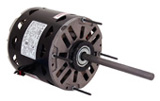
Here is an example of a PSC design that is more efficient than a previous design, and uses about 14 percent few amps. If the two motors were compared just based on amps, it might be incorrectly concluded that the previous design was a stronger motor, which is not the case.

In a perfect world, each electric motor would be 100 percent efficient. In other words, 100 percent of the power input into the motor (watts) would be converted into work (horsepower).

Alas, the world we live in is far from perfect, and that imperfection extends to the motor as well. Advances in technology have brought today’s motor closer to the ideal of 100 percent efficiency, but the best the manufacturers have been able to produce so far reaches the low 90s. As a result, whenever you energize a motor, you will get two outputs: a desirable one (work) and one that is not so desirable (heat). That can be a real issue in many cases. For example, many motors used in single-phase applications (such as shaded pole motors), barely rise above the 50 percent mark in efficiency. So you know these types of motors will use almost as many input watts to produce heat as produce work.

Equipped with this knowledge, you can understand why one of the criteria you must consider when selecting a motor for an application is the effect of operating temperatures on that motor.

A number of universal factors come into play when you deal with operating temperatures, no matter what the application. These include:

• The electrical efficiency of the motor in question;

• The ambient temperature for which the motor is rated;

• The ambient temperature in which it will operate;

• The temperature rise the motor will undergo when it is working as well as its nameplate-rated temperature rise;

• The class of electrical insulation with which the motor is made; and

• The motor’s service factor.

One of the most fundamental design criteria relating to motor lifespan is the selection of materials used to insulate the electrical parts of the motor and the capacity of those materials to withstand heat. Insulation is critical to the safe and consistent operation of the motor. If the insulation system fails, the electrical parts become short circuited which causes the winding to break down. The result is motor failure.

To help you identify which system is right for a given application, insulating materials are grouped into classes designated with letters that identify the maximum temperature capability of the materials in that class. These identifying letters are virtually universal among motor manufacturers because they are specified by the trade organization, the National Electrical Manufacturers Association (NEMA). For example, Class A insulation materials are designed to withstand a maximum temperature of 95°C (approximately 205°F) in most motor applications. Class B insulating materials must be capable of withstanding maximum temperatures of 110°C (or about 230°F). These are the two most common classes of insulation for general-purpose motors. Other classes (for example, Class F, Class H) exist for unusual, high-temperature applications.

Consider a motor that is operating normally. The temperature of its insulation will be the sum of two components. The first is the ambient temperature (in other words, the temperature of the environment surrounding the motor when it is at rest). If that motor is operating in a room, the ambient temperature would be room temperature. The second component is the temperature rise that motor experiences when it converts some of its input power to heat rather than work.

It is common practice for a manufacturer to rate the maximum ambient temperature in which a motor is designed to operate. Thanks to our friend NEMA, this maximum ambient temperature is commonly specified at 40°C (or 80°F) unless the motor is designed for a specific duty.

Using this bit of information, you can now begin to figure out the limits of temperature rise on a motor. Take, for example, a motor with a Class B insulation system. You know that its maximum rated temperature is 110°C, and you know its maximum ambient temperature is 40°C. This tells us the temperature rise is limited to 70°C if it is operating at its maximum ambient temperature.

You can use this knowledge in a number of ways when installing or replacing motors. For example, if the motor in question is capable of reaching its nameplate horsepower without its temperature rise reaching the maximum for its insulation class, you can think of that motor as having “spare” temperature capacity. That excess capacity can be translated into the capability of delivering more horsepower than the nameplate specifies without exceeding the maximum insulation temperature.

This spare horsepower is sometimes expressed as service factor. The service factor number found on the nameplate (for example, 1.25) can be used to multiply the motor’s nameplate horsepower to give you a maximum horsepower that exceeds the nameplate rating without exceeding the temperature capability of the motor.

But what if the motor must operate in an environment that is warmer than its rated ambient temperature? In that case, the temperature rise must be reduced if the motor is to stay within the temperature capacity of the insulation. In these cases, you may use a motor in an environment that is warmer than its rated ambient temperature provided you reduce the load horsepower.

It’s also important to realize that the operating conditions of the motor may also affect ambient temperature. If the motor is enclosed (in a furnace, for example, or within a protective housing such as a pump housing), the ambient temperature that motor experiences is actually the temperature of the air immediately surrounding the enclosure. This suggests you will have to consider dissipating the temperature within the enclosure by passive or positive ventilation. If you are comparing an enclosed motor with a similarly rated open and ventilated motor, you will need to consider the difficulty involved in dissipating the heat involved in the operation of the enclosed motor.

Temperature considerations rank right up there with mechanical parts failures in shortening the life expectancy of a motor. Understanding all of the factors involved in temperature can help you make intelligent choices when installing or replacing motors in the field.

Publication date: 09/10/2007

Share This Story

Looking for a reprint of this article?
From high-res PDFs to custom plaques, order your copy today!


Neil Simon aka the Motor Doctor, is regional sales manager for A.O. Smith Electrical Products Co. For more information, visit www.aosmithmotors.com.

Recommended Content

JOIN TODAY
To unlock your recommendations.

Already have an account? Sign In

  • HVAC-enrollment

    The Trades Are Back: HVACR Programs See Nearly 30% Enrollment Spike

    A new wave of future technicians is entering the pipeline.  
    News
    By: Matt Jachman
  • 2025 Top 40 Under 40

    2025 Top 40 Under 40 HVACR Professionals List

    The 11th annual Top 40 Under 40 list highlights those...
    HVAC Contracting
    By: Hannah Belloli-Oster
  • LG Ductless Mini-Split Systems

    The 9 Types of Heat Pumps

    As the U.S. moves toward electrification, heat pumps are...
    Ground Source Heat Pumps
    By: Joanna R. Turpin
Subscription Center
  • Create an Account
  • Start a Subscription
  • Manage My Account
  • Sign Up for Newsletters
  • Visit Customer Service
  • Update Preferences

More Videos

Sponsored Content

Sponsored Content is a special paid section where industry companies provide high quality, objective, non-commercial content around topics of interest to The News audience. All Sponsored Content is supplied by the advertising company and any opinions expressed in this article are those of the author and not necessarily reflect the views of The News or its parent company, BNP Media. Interested in participating in our Sponsored Content section? Contact your local rep!

close
  • Piggy Bank
    Sponsored byWatercress Financial

    Energy Prices, Inflation, and HVAC: What Today’s Homeowners Care About

  • Refrigerated Food
    Sponsored bySolstice Advanced Materials

    R-455A Refrigeration: A Cold Storage Solution for the Future

  • Airex Rooftop Units
    Sponsored byAirex Manufacturing Inc

    Consolidating Roof Penetrations: A Growing Trend in Multifamily HVAC Design

Popular Stories

HVAC-Price-Increase-graphic

HVAC Price Increase List: June 2026

Trump-Section-232.jpg

Trump Reduces Section 232 Tariffs on HVAC Equipment to 15%

R410A-Refrigerant-Cylinder.jpg

Refrigerant Recovery is a Revenue Opportunity

Heat-pump-cutaway.jpg

PFAS Rules and A2L Building Codes Continue to Evolve

Kroger.jpg

Kroger to Spend $100 Million to Reduce Refrigerant Leaks

View The ACHR NEWS
Centennial Anniversary Timeline

The ACHR News Timeline Chart
Submit a Letter
Submit a letter to our editors.

Events

November 6, 2025

Next-Gen Data Center Cooling: HVAC Innovation and Real-World Solutions

On Demand As AI workloads and high-density computing push traditional cooling methods to their limits, the data center industry is accelerating the adoption of next-generation HVAC technologies.

June 9, 2026

Before You Go All In on AI: Set Up Your Business to Actually Win

In this webinar, we'll walk you through exactly what to get in place before you add AI to your business. You'll leave with a clear picture of where you stand today and a practical action plan to set yourself up for real results.

View All Submit An Event

Poll

Summer Staff

Are you fully staffed for the summer season?
View Results Poll Archive

Products

BNI Mechanical/Electrical Square Foot Costbook, 2026 Edition

BNI Mechanical/Electrical Square Foot Costbook, 2026 Edition

See More Products
A2L Refrigerants - Free Webinar - May 21, 2026

Related Articles

  • Beating the Heat With Hybrids

    See More
  • The ACHR NEWS Podcast

    The NEWSMakers Podcast: Beating the 2025 HVAC Slowdown With Maintenance, Marketing, and Money

    See More
  • Beating The HVACR Technician Shortage

    See More

Related Products

See More Products
  • Uncomplicating The Heat Pump: Refrigeration & Air Flow Systems DVD

  • Uncomplicating The Heat Pump: Electrical System Troubleshooting DVD

  • HPOIS.png

    Heat Pump Operation, Installation, Service

See More Products

Related Directories

  • The Whalen Co.

    The Whalen Company is the pioneering manufacturer of HVAC vertical stack riser heat-exchanger fan coil units and water-source heat pumps for hotels, apartments and other multi-story buildings.
  • The Whalen Co.

    Manufacturer of HVAC vertical stack riser heat-exchanger, fan coil units, and water-source heat pumps. Applications include offices, hotels, condominiums, apartments, nursing care, senior living facilities, classrooms and dormitories.
×

Sign Up. Stay Informed.

The #1 trusted source for the HVACR industry since 1926

SUBSCRIBE
  • RESOURCES
    • Advertise
    • Contact Us
    • Advisory Board
    • Classifieds
    • Submit a Letter
    • Directories
    • Store
  • ACCOUNT CENTER
    • Create an Account
    • Start a Subscription
    • Manage My Account
    • Sign Up for Newsletters
    • Visit Customer Service
    • Update Preferences
  • SERVICES
    • Marketing Services
    • Reprints
    • Market Research
    • List Rental
    • Survey/Respondent Access
  • STAY CONNECTED
    • LinkedIn
    • Facebook
    • Instagram
    • YouTube
    • X (Twitter)
  • PRIVACY
    • PRIVACY POLICY
    • TERMS & CONDITIONS
    • DO NOT SELL MY PERSONAL INFORMATION
    • PRIVACY REQUEST
    • ACCESSIBILITY

Copyright ©2026. All Rights Reserved BNP Media, Inc. and BNP Media II, LLC.

Design, CMS, Hosting & Web Development :: ePublishing