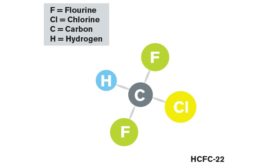
R-410A entered the scene as the replacement HFC-based, binary refrigerant blend for R-22 in “new” light commercial and residential air conditioning and heat pump applications.
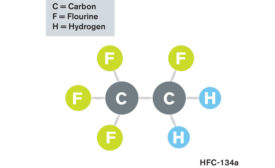
R-134a has a global-warming potential (GWP) of 1,430. This means it traps 1,430 times as much heat per kilogram as carbon dioxide does over a 100-year period. Because R-134a has such a high GWP, the U.S. Environmental Protection Agency (EPA) listed R-134a as an “unacceptable” refrigerant for certain refrigeration and air conditioning applications under its Significant New Alternatives Policy (SNAP) program.
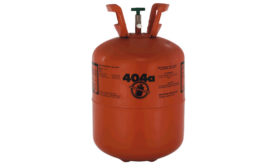
R-404A is being used by OEMs in new equipment and also on retrofitted equipment. However, because of its high global-warming potential (GWP), the U.S. Environmental Protection Agency (EPA), under its Significant New Alternatives Policy (SNAP) program, has listed R-404A as an “unacceptable” refrigerant in a number of retail food refrigeration categories and in vending machines end-uses.
In a perfect scenario, the oil in a refrigeration or air conditioning system would stay inside the compressor’s crankcase to lubricate the compressor’s moving parts. However, because of ever-changing heat loads on the system and varying system conditions there is no such thing as a perfect system in the real world.
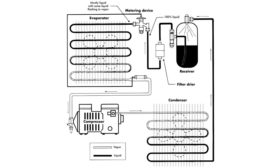
Filter driers are designed to remove foreign materials, such as moisture, dirt, sandpaper grit, soldering flux, small solder beads, and acid from a refrigeration or air conditioning system. However, filter driers are notorious for becoming restricted from moisture, sludge, dirt, or oil that has entered the system from a poor service practice or extreme operating conditions.
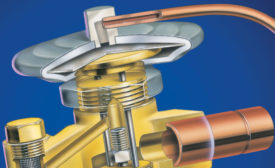
A system with a restricted metering device will display the same symptoms as a system with a liquid-line restriction. This is because the TXV is actually part of the liquid line.
A company has invented and patented a method for freezing edible alcohol products. The consistency of the products ranges from hard and solid through sorbet-like, and all stay frozen in the temperature range of 24°-28° without affecting taste, consistency, or alcohol content.
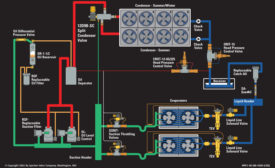
One method of head-pressure control during low ambient conditions is to use a mechanical hold-back or flooding valve located at the outlet of the condenser to hold back or flood liquid refrigerant in the condenser. This valve is often referred to as an open on rise of inlet (ORI) valve because it will start to throttle open on a rise in condenser pressure.
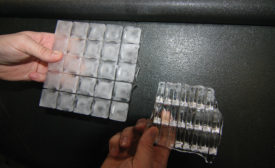
Homes, restaurants, bars, and businesses rely on clear, clean ice for many applications. Ice is considered a food source, and the water that makes the ice must be of good quality. Good quality water will produce a crystal-clear, hard piece of ice.