When evaporation occurs in a cooling tower, only the water evaporates; it exits the cooling tower as water vapor, but leaves the minerals behind to concentrate in the cooling tower’s water system.
For this column I want to discuss a real life situation regarding poor cooling in a residence and reduced airflow coming from the registers in the house. The air conditioner is a three ton (36,000 btuh), HCFC-22, split type, air conditioner with the A-coil in the plenum of the furnace located in the basement.
The condenser is the component that rejects the heat from the system. Most equipment is air cooled and rejects heat to the air. The coils are copper or aluminum and both types have aluminum fins to add to the heat exchange surface area.
Ferris State University’s Commercial Refrigeration Laboratory has gone totally chlorine-free. By replacing the refrigerant HCFC-22 that was in two medium-temperature commercial refrigeration cases in the laboratory, the students in the associate degree program in HVACR can boast that the lab is now chlorine-free.
This column focuses on condenser splitting. But first, here’s a quick review of condenser flooding before covering condenser splitting to help all better understand both concepts and their advantages and disadvantages.
This article is part two of a two-part series on ice flake machine troubleshooting. The last article, which appeared in the Feb. 7 NEWS, examined troubleshooting low and high water levels. This article will examine water impurities and mechanical problems.
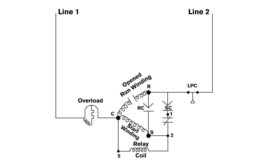
My Feb. 7 column focused on ice flake machine troubleshooting. I will have more to say on that specific topic in my April 4 column. For this column, I want to take a look at amperage as it relates to HVACR compressors.
This article is part one of a two-part series on ice flake
machine troubleshooting. This article will examine troubleshooting low and high
water levels. Next month’s article will examine water impurities and mechanical
problems.
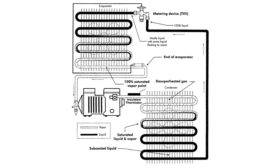
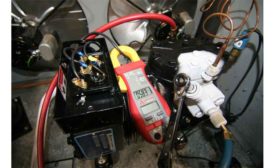
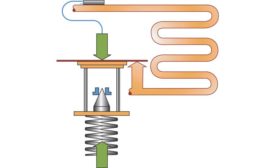
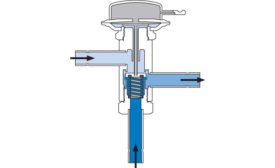
This article explores how a restricted metering device will affect system performance and efficiency. The system is a commercial refrigeration system with a TXV as the metering device. The refrigerant being used is HFC-134a. Very similar results will occur if an automatic expansion valve (AXV) is used.
Photos from the 2013 ACCA Conference & IE3 Expo in Orlando, Fla.
Podcasts
Cade Clark, assistant vice president of government affairs for the Air-Conditioning, Heating & Refrigeration Institute (AHRI), gives a brief overview of the new version of the Shaheen-Portman bill, what AHRI thinks of the energy-efficiency legislation, and how it might affect the HVACR industry if it becomes law.
With access to over one million professionals and more than 60 industry-specific publications, Clear Seas Research offers relevant insights from those who know your industry best. Let us customize a market research solution that exceeds your marketing goals.
DON'T MISS A THING
Register today for complete access to ACHRNews.com. Get full access to the latest features, Extra Edition, and more.