Here’s a sobering thought for you: The average age of a refrigeration service technician that works on supermarket equipment is greater than 55. That’s according to Terry Roberts, president of Merchandising by Design. Her question was, “Who’s going to maintain these stores” after these ‘seniors’ leave the industry?
When it comes to keeping employees happy, Conditioned Air Corp., Naples, Fla., does it better than most, which is why they are this year's Best Contractor to Work For in the South region.
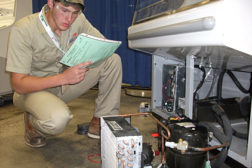
The ‘R’ in Refrigeration Service Engineers Society (RSES) got its due at the 76th RSES Annual Conference and HVACR Technology Expo in Pittsburgh, Pa. Topics ranged from the latest trends in refrigerants to the servicing of equipment, from basic components to complex systems using such refrigerants.
The U.S. International Trade Commission (ITC) voted 6-0 on Dec. 13 to move forward against China regarding possible illegal hydrofluorocarbon (HFC)-134a coming into the U.S.
Marchese, who serves as a monthly columnist in The NEWS’ Refrigeration Zone section, was elected during the 76th annual RSES Conference and HVACR Technology Expo this past October.
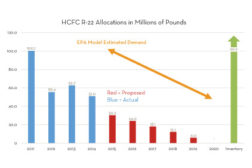
Counterfeit and illegally imported refrigerants have existed under the surface of the HVACR industry for years. With hydrochlorofluorocarbon (HCFC)-22 increasing in price due to a government phase down, more and more fly-by-nighters are working to get their hands on the product any way they can.
As HCFC-22 is phased out and alternative refrigerants enter the market, contractor attention and manufacturer intent will steer the market toward the best remaining refrigerant options.
President Obama’s Climate Action Plan announced during the summer included a specific reference to global warming potential (GWP) issues related to a number of hydrofluorocarbon (HFC) refrigerants commonly used by contractors in the HVACR industry.