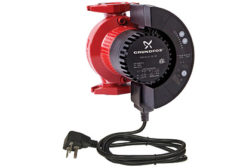
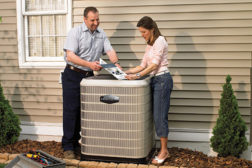
The homeowners wanted to maintain the integrity of the exposed wood of the home and did not want any visible signs of ducting or outlets on the interior; and no mechanical “boxes” around the exterior. What was the solution?
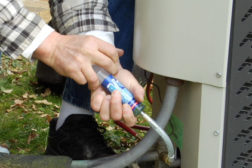
There are many reasons for wanting to stop refrigerant leaks in HVAC mechanical equipment. Some of the most obvious are partial or total loss of cooling capacity, decrease in efficiency, system damage, costly repairs and cleanup, etc. The list goes on and on.
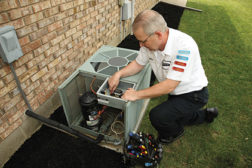
Some people say that the compressor is the key component, or heart, of an air conditioning system. And like the human heart, the compressor must be kept in tip-top condition to run the system efficiently.
Some of the most common problems and solutions for smooth compressor operation can be found in training materials and on-the-job experience. There is also another method for educating HVAC contractors and service technicians — getting answers straight from the manufacturers.
Ammonia is both a friend to refrigeration contractors and a danger, too. When used properly in refrigeration units, its outstanding heat transfer capabilities can keep food cold for long periods of time, it does not harm the environment, and it is biodegradable. But exposure to ammonia does pose a danger to human health.
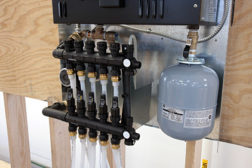
Instant water heaters, high-tech boilers, and steam solutions are just a few examples of wet heat technology. Here are a few products in that segment that might be of interest to the HVACR contractor.
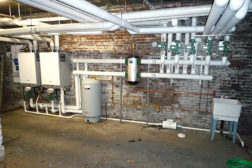
This article takes a look at three special projects that involved hydronic heating and how each contractor solved his client’s problem by choosing the proper design and equipment for each job — and how these jobs may give other HVAC contractors some insight into how they can sell wet heat to their own clients.
HVAC contractors have many choices of hydronic heating equipment, and these are a few examples of how knowledge of wet heat technology can make the selling job a little easier.
Technology can be a double-edged sword. On the one hand, trying to keep up with changing technology can be a never-ending battle that consumes your time and budget. On the other hand, not bothering to keep up with technology can hurt a business. So what do HVAC contractors see as tech trends in the next year?
The features and benefits of high-tech HVAC equipment can often be lost on the end users — homeowners and building owners. What may seem to HVAC contractors like the greatest invention since sliced bread can result in blank stares from customers. But there is a way to make tech trends understandable to customers.