ACHR News
search
Ask ACHR NEWS AI
cart
facebook twitter instagram linkedin youtube
  • Sign In
  • Subscribe
  • Sign Out
  • My Account
ACHR News
  • NEWS
    • Breaking News
    • New HVAC Products
    • Featured Products
    • Manufacturer Reports
    • HVAC Data
    • Legislation
    • ACHR NEWS Centennial
  • RESIDENTIAL
    • Air Conditioners
    • Furnaces
    • Residential Heat Pumps
    • Ductless
    • Residential IAQ
    • Testing, Monitoring, Tools
    • Components & Accessories
  • COMMERCIAL
    • Air Handlers
    • Rooftop Units
    • Chillers and Cooling Towers
    • Commercial Heat Pumps
    • Boilers and Hydronics
    • VRF/Ductless
    • Commercial IAQ
  • REFRIGERATION
    • Refrigerants
    • Refrigerant Regulations
    • Leak Management
  • CONTRACTOR PRO
    • Geothermal
    • Homeowner Study
    • VRF and VRV Ductless
    • Unitary Trends
  • EDUCATION
    • Training and Education
    • Business Management
    • Service and Maintenance
    • Continuing Education
    • Market Research >
      • HVAC Brand Awareness Report
      • VRV, VRF, VRVZ Report
      • Unitary Trends Report
      • Water Heat Professionals Report
    • Webinars
    • Sponsor Insights
    • eProducts Info
    • White Papers
  • EVENTS
    • HVAC Contractor Forum
    • Industry Events and Webinars
  • MEDIA
    • Videos
    • AHR Expo 2025 Videos
    • Podcasts >
      • ACHR News Podcast
      • HARDI Podcasts
      • AHR Expo Podcasts
      • ACCA Podcasts
    • Interactive Spotlights
    • Quizzes
    • eBooks
    • HVAC Talkback
  • HVAC GROUP
    • ACHR NEWS >
      • Current Issue
      • Digital Edition
      • Subscribe
    • Distribution Trends
    • SNIPS NEWS >
      • Join SNIPS NEWS
    • Engineered Systems News >
      • Join ES News
    • HVACR Directory
    • Contests
    • Newsletters
    • Contact
    • Advertise
    • My Account
HVAC ContractingTechnical

The Operative Bald Spot

March 20, 2006
I have always been just a little perturbed that my maternal grandfather passed on his lack of hair to me through his gene pool. Those of us who are follicle challenged know that baldness has few advantages. Cheaper haircuts just don't make up for the blinding sheen. That being said, a bald head does have one advantage over a well populated head of hair; it is the ultimate "operative temperature sensor." Maybe somehow grandpa knew I was destined to be in the radiant heating business. With all that bare skin up top I can immediately sense the smallest changes in air temperature or radiant heat transfer. The combination of the two is what defines "operative temperature" and the comfort equation that drives the radiant industry.

On the extreme, when I walk outside on a cold cloudy day, my head quickly informs my brain that a warm cap is in order lest all my body heat escape directly through my shiny dome like hot air rising up a chimney. That cold air hits my warm scalp and convective heat exchange is immediate. An infrared photo would light up my head like a beacon and show waves of heat traveling skyward. When the day is cool and sunny, that same patch of skin sends a different signal but with a similar message: "put on a cap." This time the sun is beating down on my sensitive bare spot and threatening to cook it to a sunset red if not acted upon in short order.

Operative temperature is that temperature which combines both the air temperature and the radiant temperature effect. Unfortunately, conventional heating (and cooling) systems measure only the air temperature. If my biological sensor was like a typical wall thermostat and only measured air temperature, on a cool sunny day my scalp would cook from the radiant energy and I would be no more the wiser until I looked in the mirror the next morning.

Actually, the human body is a very efficient operative temperature sensor. It also senses humidity and heat conduction (walk across a cold tile floor barefoot). The task of any space heating or cooling system is to create an environment which satisfies all the operative temperature requirements of the occupants. If that is done, then the occupant is comfortable. If one temperature is out of whack, the others must make up the difference. It is a balancing act. As technology advances and consumers are demanding more comfort, this balancing act becomes a great challenge.

In the good old days of stone castles, mud huts, or log cabins, people would sit in front of roaring fireplaces and cook one side of their bodies with radiant heat and chill the other with the cool drafty air coming in through the cracks and crannies. At just the right distance and frequent turning they could get an average temperature. This was acceptable because it was better than the only alternative, no heat at all.

Fast forward a few centuries and people have learned how to "can" hot air and radiant heat and move it to where it is needed. For some reason, Europeans and Asians chose to move primarily radiant heat and the Americans elected to move hot air. Europeans used the fire to heat water and then moved the water to a radiator. Americans heat air with fire and blow the heated air into the room. (Barely 5 percent of heating in the United States is hot water heat.)

Now it seems reasonable that if my body requires a balance of radiant, conduction, and convective heat transfer, I should look for a heating system that will satisfy all three of these criteria. Enter the modern radiant heating system. Now, even though it is called a "radiant" heating system, it also heats the air. In fact, a typical radiant floor heating system delivers almost half of its heat by natural convection - cool air coming in contact with the floor, being heated and rising. The big difference between convection from a radiant floor and forced convection from a hot air system is air temperature and velocity. A radiant floor produces air temperature just a few degrees over the floor surface temperature and only a degree or two above the average room temperature. This air gently rises and dissipates its heat in the first few feet above the floor until it reaches room temperature. There is virtually no hot air rising to the ceiling. In fact, the temperature at the ceiling is slightly cooler than at shoulder height. This "half radiant/half convection" makes the body smile because that is almost precisely the ratio at which the body loses heat. It also makes my head happy because it senses a well balanced environment.

The combined heat transfer of a radiant system is also quite different than produced by the typical baseboard convector. Baseboard convectors are designed to primarily heat air, not radiate heat. Warm air rises from the baseboard up the wall, across the ceiling, down to the floor, and back to the baseboard as it cools. Its operation is dependent on air temperature stratification. While significantly better than forced air convection, it cannot produce the balanced comfort of a radiant system.

Looking for quick answers on air conditioning, heating and refrigeration topics? Try Ask ACHR NEWS, our new smart AI search tool. Ask ACHR NEWS →
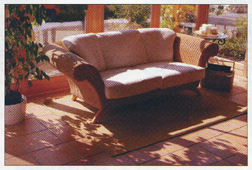
A person's biological operative sensor will sense comfort changes as we move about a room. Large widows feel "drafty" as you move closer to them on a cold winter day. You feel the air that is cooled by the window as it falls to the floor, but most of that chilly feeling comes from the radiant heat transfer of your warm body giving up its heat to the cold window.

When faced with a cold surface like a window, once again radiant heating systems come to the rescue. This can be in the form of concentrated tubes or electric elements in the floor area adjacent to the cold surface, a wall mounted radiator, or even ceiling radiant panels. The beauty of radiant heat transfer is that it travels in any direction and is self regulating. The larger the difference between the heated surface and the cold surface, the greater the heat transfer. You just have to make sure that there is enough heat delivered to the radiant surface to supply the heat transfer process. As the temperature of the cold surface drops, the temperature difference between it and the heated surface increases, increasing the output of the heated surface. That is why radiant tubing or electric elements are often spaced closer together near outside walls. The water or electric element carries the heat so, where more heat is required, more heat energy is needed. This does not increase the "temperature" of the radiant surface; it only increases its heating capacity and allows it to compensate for cold surfaces naturally.

Outside of the comfort benefits of radiant systems, there are energy savings as well. In a typical forced air heated house, my biological operative sensor tells me that the radiant portion of my comfort status is lacking so I should increase the air temperature or put on some more clothes. I opt for the former and turn up the thermostat on the wall to compensate for the cold walls, windows, ceilings, and floors. In fact, the colder it is outside, the more I turn up the thermostat. Of course most of that hot air immediately rises to the ceiling where it doesn't do me any good and proceeds to transfer heat to the cold attic. On its way to the ceiling it washes over cold walls and frigid windows... more heat transferred to the outside. The hotter the air, the faster the heat transfer.

Now compare that to a radiant heated house where the radiantly heated surfaces are only a few degrees above average room temperature and the radiant heat transfer part of the comfort factor is being satisfied. My biological operative sensor is satisfied at lower air temperatures and there is no hot air rising to the ceiling or wiping the walls. The result is less heat loss through walls, windows, and ceilings. Not only that, but my feet are just as comfortable as my head. No cool moving air at the floor to slow down the blood flow in my toes and no hot air at the ceiling to make my head sweat. I don't turn up the thermostat as it gets colder outside. In fact, the radiant heat transfer increases automatically as outdoor temperatures decrease and my little abode gets even more comfortable without touching a thing!

Balance... it is all about balance. A good balance between radiant, convective, and conductive heat transfer make my operative sensor more comfortable and my pocketbook healthier. Only a radiant heating system can do all that. Maybe bald people are a little more sensitive to operative temperature, but everyone benefits when it is in balance, even those with thick, flowing, curly locks.

Reprinted with permission from Radiant Panel Report, a newsletter of the Radiant Panel Association, January 2006. Lawrence Drake is executive director of the Radiant Panel Association. For more information, visit www.radiantpanelassociation.org.

Publication date: 03/20/2006

Share This Story

Looking for a reprint of this article?
From high-res PDFs to custom plaques, order your copy today!


Recommended Content

JOIN TODAY
To unlock your recommendations.

Already have an account? Sign In

  • HVAC-enrollment

    The Trades Are Back: HVACR Programs See Nearly 30% Enrollment Spike

    A new wave of future technicians is entering the pipeline.  
    News
    By: Matt Jachman
  • 2025 Top 40 Under 40

    2025 Top 40 Under 40 HVACR Professionals List

    The 11th annual Top 40 Under 40 list highlights those...
    HVAC Contracting
    By: Hannah Belloli-Oster
  • LG Ductless Mini-Split Systems

    The 9 Types of Heat Pumps

    As the U.S. moves toward electrification, heat pumps are...
    Heat Pumps
    By: Joanna R. Turpin
Subscription Center
  • Create an Account
  • Start a Subscription
  • Manage My Account
  • Sign Up for Newsletters
  • Visit Customer Service
  • Update Preferences

More Videos

Sponsored Content

Sponsored Content is a special paid section where industry companies provide high quality, objective, non-commercial content around topics of interest to The News audience. All Sponsored Content is supplied by the advertising company and any opinions expressed in this article are those of the author and not necessarily reflect the views of The News or its parent company, BNP Media. Interested in participating in our Sponsored Content section? Contact your local rep!

close
  • Piggy Bank
    Sponsored byWatercress Financial

    Energy Prices, Inflation, and HVAC: What Today’s Homeowners Care About

  • Refrigerated Food
    Sponsored bySolstice Advanced Materials

    R-455A Refrigeration: A Cold Storage Solution for the Future

  • Airex Rooftop Units
    Sponsored byAirex Manufacturing Inc

    Consolidating Roof Penetrations: A Growing Trend in Multifamily HVAC Design

Popular Stories

HVAC-Price-Increase-graphic

HVAC Price Increase List: June 2026

Trump-Section-232.jpg

Trump Reduces Section 232 Tariffs on HVAC Equipment to 15%

R410A-Refrigerant-Cylinder.jpg

Refrigerant Recovery is a Revenue Opportunity

Heat-pump-cutaway.jpg

PFAS Rules and A2L Building Codes Continue to Evolve

Kroger.jpg

Kroger to Spend $100 Million to Reduce Refrigerant Leaks

View The ACHR NEWS
Centennial Anniversary Timeline

The ACHR News Timeline Chart
Submit a Letter
Submit a letter to our editors.

Events

November 6, 2025

Next-Gen Data Center Cooling: HVAC Innovation and Real-World Solutions

On Demand As AI workloads and high-density computing push traditional cooling methods to their limits, the data center industry is accelerating the adoption of next-generation HVAC technologies.

June 17, 2026

Decarbonization Without Disruption

This webinar will explore practical HVAC decarbonization strategies that minimize disruption while maximizing long-term performance and ROI.

View All Submit An Event

Poll

Summer Staff

Are you fully staffed for the summer season?
View Results Poll Archive

Products

BNI Mechanical/Electrical Square Foot Costbook, 2026 Edition

BNI Mechanical/Electrical Square Foot Costbook, 2026 Edition

See More Products
A2L Refrigerants - Free Webinar - May 21, 2026

Related Articles

  • Fun Is The Operative Word For Employees

    See More
  • Make ‘Profit' The Operative Word In 2005

    See More
  • Contractors: ClimateCare Co-operative

    See More

Related Products

See More Products
  • math.jpg

    Math for the Technician

  • Uncomplicating The Heat Pump: Refrigeration & Air Flow Systems DVD

  • Uncomplicating The Heat Pump: Electrical System Troubleshooting DVD

See More Products

Related Directories

  • Spot Coolers

    For 30 years, Spot Coolers has been the premier provider of the best engineered, highest performing portable air conditioning units. With 40 US locations, Spot Coolers provides cooling and heating solutions from computer rooms to emergency back-up cooling and heating. Rentals and sales.
×

Sign Up. Stay Informed.

The #1 trusted source for the HVACR industry since 1926

SUBSCRIBE
  • RESOURCES
    • Advertise
    • Contact Us
    • Advisory Board
    • Classifieds
    • Submit a Letter
    • Directories
    • Store
  • ACCOUNT CENTER
    • Create an Account
    • Start a Subscription
    • Manage My Account
    • Sign Up for Newsletters
    • Visit Customer Service
    • Update Preferences
  • SERVICES
    • Marketing Services
    • Reprints
    • Market Research
    • List Rental
    • Survey/Respondent Access
  • STAY CONNECTED
    • LinkedIn
    • Facebook
    • Instagram
    • YouTube
    • X (Twitter)
  • PRIVACY
    • PRIVACY POLICY
    • TERMS & CONDITIONS
    • DO NOT SELL MY PERSONAL INFORMATION
    • PRIVACY REQUEST
    • ACCESSIBILITY

Copyright ©2026. All Rights Reserved BNP Media, Inc. and BNP Media II, LLC.

Design, CMS, Hosting & Web Development :: ePublishing