ACHR News
search
Ask ACHR NEWS AI
cart
facebook twitter instagram linkedin youtube
  • Sign In
  • Subscribe
  • Sign Out
  • My Account
ACHR News
  • NEWS
    • Breaking News
    • New HVAC Products
    • Featured Products
    • Manufacturer Reports
    • HVAC Data
    • Legislation
    • ACHR NEWS Centennial
  • RESIDENTIAL
    • Air Conditioners
    • Furnaces
    • Residential Heat Pumps
    • Ductless
    • Residential IAQ
    • Testing, Monitoring, Tools
    • Components & Accessories
  • COMMERCIAL
    • Air Handlers
    • Rooftop Units
    • Chillers and Cooling Towers
    • Commercial Heat Pumps
    • Boilers and Hydronics
    • VRF/Ductless
    • Commercial IAQ
  • REFRIGERATION
    • Refrigerants
    • Refrigerant Regulations
    • Leak Management
  • CONTRACTOR PRO
    • Geothermal
    • Homeowner Study
    • VRF and VRV Ductless
    • Unitary Trends
  • EDUCATION
    • Training and Education
    • Business Management
    • Service and Maintenance
    • Continuing Education
    • Market Research >
      • HVAC Brand Awareness Report
      • VRV, VRF, VRVZ Report
      • Unitary Trends Report
      • Water Heat Professionals Report
    • Webinars
    • Sponsor Insights
    • eProducts Info
    • White Papers
  • EVENTS
    • HVAC Contractor Forum
    • Industry Events and Webinars
  • MEDIA
    • Videos
    • AHR Expo 2025 Videos
    • Podcasts >
      • ACHR News Podcast
      • HARDI Podcasts
      • AHR Expo Podcasts
      • ACCA Podcasts
    • Interactive Spotlights
    • Quizzes
    • eBooks
    • HVAC Talkback
  • HVAC GROUP
    • ACHR NEWS >
      • Current Issue
      • Digital Edition
      • Subscribe
    • Distribution Trends
    • SNIPS NEWS >
      • Join SNIPS NEWS
    • Engineered Systems News >
      • Join ES News
    • HVACR Directory
    • Contests
    • Newsletters
    • Contact
    • Advertise
    • My Account

Keys To Proper System Design

November 5, 2004
Ask anyone who has owned a contracting company for a long time to share his or her worst nightmare and, inevitably, it finishes with how much profit was eaten up fixing this system or that product. Maybe it was the time and materials to make things right. Perhaps it was the lawyers' fees defending the company in court. Whatever the cost, it probably included increased insurance premiums.

Robert Bean
About five years ago, I and a few of my contracting friends were led to the "fountain of forgiveness" in a great book by Henry Petroski, To Engineer is Human: The Role of Failure in Successful Design.

Designing for failure is about foolproofing or mistake-proofing anything. For us business people in the HVAC design industry, it's about how to keep the dollars in our jeans by anticipating system or product failures which, if left unresolved, lead to customer complaints.

The current scope of our profit aches and pains show up in the American Comfort Surveyâ„¢, published by Decision Analyst in 2000, wherein one in two consumers claimed to be unhappy with their comfort system. Imagine the slow drip of dollars away from the industry coffers as we try to repair, replace, redesign, or over-haul existing stuff - some of it not even one year old.

I think a pivotal moment in designing for failure came from H.F. Levy, P.E. (Life Member ASHRAE), when in 2002 he made this profound statement: "We do not seem to recognize that our real customer is the occupant, not the building. No other industry that I know of gets away with calling a system good and acceptable when only 80 percent of the occupants stop complaining."

What Mr. Levy is referring to is the satisfaction target range provided in ASHRAE Standard 55, "Thermal Environmental Conditions for Human Occupancy." The standard calls for 80 percent "happiness," and yet, according to Decision Analysts, our industry is only hitting 50 percent. This can't be a good thing for us or the industry.

So, where does the designing for failure philosophy fit in? Look at your last hydronics project. Did you make tradeoffs between error prevention, redundancy, and familiarity against functionality and cost? Was the latest and greatest of gadgetry installed because the homeowner saw it on the Web?

From experience, I know that one bad job with all those cost reductions and "newness" always comes back to haunt you or the next service contractor.

Having been through that special field of landmines, I have concluded the key to good design is more about whether the occupant or operator can comprehend the system rather than whether we can understand it; and experience is teaching us, it's a greater challenge to design to what the other person knows, rather than trying to teach them what we know.

Looking for quick answers on air conditioning, heating and refrigeration topics? Try Ask ACHR NEWS, our new smart AI search tool. Ask ACHR NEWS →

For this reason, we are suggesting that it makes far more sense to design hydronic systems that make error and failure irrelevant than to assemble and install something which upon failure makes the system useless or ineffective. This understanding forms the basis for the first law of designing for failure: the "grounded plug approach."

Law No. 1

Think power cords. It is often said the best design is one that is simple, effective, and works so well it requires no instructions. What comes to mind is the grounded power cord in your truck. It is an engineering marvel.

We can describe it with technical words such as voltage, amps, cycles, ohms, temperature, fire ratings, chemical and moisture resistance, and so on, but the greatest feature of a grounded power cord is this: It can only be inserted one way.

We do not need instructions on preparing the cord. We do not need to take a course on how to insert the male end into the female receptacle. The grounded plug makes illegal or improper things impossible.

However, in hydronics most equipment can go in backwards, from circulators to valves. Because it can, it often does!

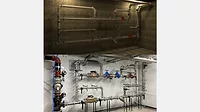
Figure 1. Simplified boiler room inventory with preventive steps and failure response.

Law No. 2

Imagine what it would be like to be your customer in the future. Pretend it is the year 2020 and you're getting ready to celebrate your 80th birthday. The weather forecaster is blaring that it's -30 degrees F today, but you barely catch it because your hearing was shot a long time ago. The first thing you do is reach for your glasses because you haven't been able to see well for 35 years, and as you stumble out of bed, every joint and muscle aches from years of living the good life.

Unlike other winter mornings, this one is a little different because it is cold inside your home. Something is wrong. You throw on a sweater and your slippers and go check the thermostat (which you can barely read); sure enough it says exactly what you feel. It's time to call a heating technician. If you are lucky, you have a son-in-law who is a contractor. If not, you start looking in the Yellow Pages for someone who knows something about hydronic heating.

We know the numbers of skilled tradespeople are declining. At the same time, the numbers of sophisticated installations are going up. If your system in the year 2020 needs work, what are the odds other systems are needing work? Who becomes a priority - the single mother with two small children or the 80-year-old?

The second law of designing for failure requires designers to engineer systems for people, and therefore to introduce the human element. This forces us to propose radical questions like, "What happens to the resident of Fairweather (now Coldasice), North America, when the heating system crashes? How do we define acceptable failure exposure in terms of health and safety, disruption of service, protection of an asset, probability, and cost?"

I challenge every contractor-designer in North America to put yourself in the shoes of a customer in the year 2020 and ask, "What will it be like owning tomorrow, what I have designed and installed today?"

Law No. 3

Inoculate against failure. Inoculating against failure requires designers to systematically identify, evaluate, prioritize, and document potential points of failure and ask, "What are the consequences to a system or project in a worst-case scenario?"

The inoculation becomes most effective when you have built in temporary or permanent solutions that require low or no skill and, if required, readily available parts. It means establishing some kind of consistency into the systems you design and install.

Every possible combination of equipment and application needs a customized emergency plan; when the right design approach provides a single plan to service all your systems, these customized plans become absolutely unnecessary.

Consistency reduces and contains the number of possible combinations of events leading up to failure. Consistency is easily accomplished by either your own doing or taking advantage of preassembled products available by well-established, reputable companies.

Inoculation plans are living documents. A particular manufacturer may have a run of bad product, which goes unnoticed for years and then suddenly fails. How you respond to the failure becomes part of the emergency response system so when it happens, you can do it quickly and efficiently.

A partial inoculation plan for a boiler room might include an inventory of what is planned, what is currently on site, and response to failure.

Robert Bean, R.E.T., is a Registered Engineering Technologist in the discipline of Building Construction. He provides corporate and technical guidance to North American businesses. For more information, visit www.healthyheating.com.

Publication date: 11/08/2004

Share This Story

Looking for a reprint of this article?
From high-res PDFs to custom plaques, order your copy today!


Recommended Content

JOIN TODAY
To unlock your recommendations.

Already have an account? Sign In

  • HVAC-enrollment

    The Trades Are Back: HVACR Programs See Nearly 30% Enrollment Spike

    A new wave of future technicians is entering the pipeline.  
    Training and Education
    By: Matt Jachman
  • 2025 Top 40 Under 40

    2025 Top 40 Under 40 HVACR Professionals List

    The 11th annual Top 40 Under 40 list highlights those...
    HVAC Contracting
    By: Hannah Belloli-Oster
  • LG Ductless Mini-Split Systems

    The 9 Types of Heat Pumps

    As the U.S. moves toward electrification, heat pumps are...
    Air Source Heat Pumps
    By: Joanna R. Turpin
Subscription Center
  • Create an Account
  • Start a Subscription
  • Manage My Account
  • Sign Up for Newsletters
  • Visit Customer Service
  • Update Preferences

More Videos

Sponsored Content

Sponsored Content is a special paid section where industry companies provide high quality, objective, non-commercial content around topics of interest to The News audience. All Sponsored Content is supplied by the advertising company and any opinions expressed in this article are those of the author and not necessarily reflect the views of The News or its parent company, BNP Media. Interested in participating in our Sponsored Content section? Contact your local rep!

close
  • Piggy Bank
    Sponsored byWatercress Financial

    Energy Prices, Inflation, and HVAC: What Today’s Homeowners Care About

  • Refrigerated Food
    Sponsored bySolstice Advanced Materials

    R-455A Refrigeration: A Cold Storage Solution for the Future

  • Airex Rooftop Units
    Sponsored byAirex Manufacturing Inc

    Consolidating Roof Penetrations: A Growing Trend in Multifamily HVAC Design

Popular Stories

HVAC-Price-Increase-graphic

HVAC Price Increase List: June 2026

Trump-Section-232.jpg

Trump Reduces Section 232 Tariffs on HVAC Equipment to 15%

R410A-Refrigerant-Cylinder.jpg

Refrigerant Recovery is a Revenue Opportunity

Heat-pump-cutaway.jpg

PFAS Rules and A2L Building Codes Continue to Evolve

Kroger.jpg

Kroger to Spend $100 Million to Reduce Refrigerant Leaks

View The ACHR NEWS
Centennial Anniversary Timeline

The ACHR News Timeline Chart
Submit a Letter
Submit a letter to our editors.

Events

November 6, 2025

Next-Gen Data Center Cooling: HVAC Innovation and Real-World Solutions

On Demand As AI workloads and high-density computing push traditional cooling methods to their limits, the data center industry is accelerating the adoption of next-generation HVAC technologies.

June 9, 2026

Before You Go All In on AI: Set Up Your Business to Actually Win

In this webinar, we'll walk you through exactly what to get in place before you add AI to your business. You'll leave with a clear picture of where you stand today and a practical action plan to set yourself up for real results.

View All Submit An Event

Poll

Summer Staff

Are you fully staffed for the summer season?
View Results Poll Archive

Products

BNI Mechanical/Electrical Square Foot Costbook, 2026 Edition

BNI Mechanical/Electrical Square Foot Costbook, 2026 Edition

See More Products
A2L Refrigerants - Free Webinar - May 21, 2026

Related Articles

  • Proper Radiant System Design Aids Troubleshooting

    See More
  • Proper Use, Care Are Keys to Long Tool Life

    See More
  • Aalberts Integrated Piping Systems

    Aalberts IPS Launches Tools to Streamline Piping System Design

    See More

Related Products

See More Products
  • Manual LLH Cover_Final.jpg

    Manual LLH - 2019 (HVAC System Design for Low Load Homes)

  • Manual Q.jpg

    Manual Q - Low Pressure, Low Velocity Duct System Design

  • 9781439842126.jpg

    Heat Exchanger Design Handbook, Second Edition

See More Products

Related Directories

  • Energy Design Systems LLC

    Energy Design Systems is an industry leading provider of innovative marketing programs, HVAC design software, and in-home sales tools and training for over 30 years.
×

Sign Up. Stay Informed.

The #1 trusted source for the HVACR industry since 1926

SUBSCRIBE
  • RESOURCES
    • Advertise
    • Contact Us
    • Advisory Board
    • Classifieds
    • Submit a Letter
    • Directories
    • Store
  • ACCOUNT CENTER
    • Create an Account
    • Start a Subscription
    • Manage My Account
    • Sign Up for Newsletters
    • Visit Customer Service
    • Update Preferences
  • SERVICES
    • Marketing Services
    • Reprints
    • Market Research
    • List Rental
    • Survey/Respondent Access
  • STAY CONNECTED
    • LinkedIn
    • Facebook
    • Instagram
    • YouTube
    • X (Twitter)
  • PRIVACY
    • PRIVACY POLICY
    • TERMS & CONDITIONS
    • DO NOT SELL MY PERSONAL INFORMATION
    • PRIVACY REQUEST
    • ACCESSIBILITY

Copyright ©2026. All Rights Reserved BNP Media, Inc. and BNP Media II, LLC.

Design, CMS, Hosting & Web Development :: ePublishing