ACHR News
search
Ask ACHR NEWS AI
cart
facebook twitter instagram linkedin youtube
  • Sign In
  • Subscribe
  • Sign Out
  • My Account
ACHR News
  • NEWS
    • Breaking News
    • New HVAC Products
    • Featured Products
    • Manufacturer Reports
    • HVAC Data
    • Legislation
    • ACHR NEWS Centennial
  • RESIDENTIAL
    • Air Conditioners
    • Furnaces
    • Residential Heat Pumps
    • Ductless
    • Residential IAQ
    • Testing, Monitoring, Tools
    • Components & Accessories
  • COMMERCIAL
    • Air Handlers
    • Rooftop Units
    • Chillers and Cooling Towers
    • Commercial Heat Pumps
    • Boilers and Hydronics
    • VRF/Ductless
    • Commercial IAQ
  • REFRIGERATION
    • Refrigerants
    • Refrigerant Regulations
    • Leak Management
  • CONTRACTOR PRO
    • Geothermal
    • Homeowner Study
    • VRF and VRV Ductless
    • Unitary Trends
  • EDUCATION
    • Training and Education
    • Business Management
    • Service and Maintenance
    • Continuing Education
    • Market Research >
      • HVAC Brand Awareness Report
      • VRV, VRF, VRVZ Report
      • Unitary Trends Report
      • Water Heat Professionals Report
    • Webinars
    • Sponsor Insights
    • eProducts Info
    • White Papers
  • EVENTS
    • HVAC Contractor Forum
    • Industry Events and Webinars
  • MEDIA
    • Videos
    • AHR Expo 2025 Videos
    • Podcasts >
      • ACHR News Podcast
      • HARDI Podcasts
      • AHR Expo Podcasts
      • ACCA Podcasts
    • Interactive Spotlights
    • Quizzes
    • eBooks
    • HVAC Talkback
  • HVAC GROUP
    • ACHR NEWS >
      • Current Issue
      • Digital Edition
      • Subscribe
    • Distribution Trends
    • SNIPS NEWS >
      • Join SNIPS NEWS
    • Engineered Systems News >
      • Join ES News
    • HVACR Directory
    • Contests
    • Newsletters
    • Contact
    • Advertise
    • My Account

Don't Bury The Compressor Before It's Dead

March 31, 2005
Here's a statistic that should give contractors and technicians pause before they condemn a compressor at a jobsite: One-third of all compressors pulled from the field, returned to manufacturers, and torn down for failure analyses do not have observable defects. In other words, these compressors were most likely good, workable compressors when they were replaced.

Such a phenomenon has been taking place for years, and it even has a name. It's called the "no defect found" (NDF) compressor return.

Here's a typical situation. During a field service job, somehow the compressor was suspected to be problematic. After the replacement the system started to run, so the problem seemed to be confirmed and solved from the field service point of view.

But is that really the case? What was observed that led the repairperson to condemn the compressor?

Compressor manufacturers have received the following reasons for return that have accompanied compressors:

  • Moving parts locked.

  • Motor winding grounded.

  • Motor winding open.

  • Unacceptable noise.

  • Won't start.

  • Overheat/current too high.

  • Runs but won't pump.

  • Low capacity.

    When the compressor's moving parts lock or when the motor winding is grounded, it is sufficient to say that the compressor is dead. However, the rest of the reasons in the list are iffy. Let's take a look at potential problems related to these symptoms.

    Motor open: When you measure a compressor motor winding, and if the compressor is still hot shortly after a shutdown, make sure that the opened protector isn't causing the circuit to open.

    Noise: Noise can be a good indicator of mechanical failure in a compressor, but it is also very subjective. Many other problems can cause a loud-running compressor, such as improper installation, loose nut, bad or missing rubber grommet, etc. If the compressor lacks oil or is having some floodback while running, this could also cause it to make a peculiar noise. This is especially possible for scroll compressors.

    Won't start: It's true that a dead compressor will not start, but a compressor that won't start may not necessarily be dead. Many other things can prevent a compressor from starting, such as a bad capacitor, a malfunctioning delayed start from the controller, and, again, an opened protector. A system with low-pressure protection may prevent the compressor from starting if there is a slow refrigerant leak.

    Overheat/current too high: Worn or damaged mechanical parts can make a compressor run hot at too high of a current. Many other conditions in the system can cause these problems, too. Were the condenser and condenser fan working properly? Was there a refrigerant leak? Was the weather hot? Did the capacities of the outdoor and indoor units match?

    Runs but won't pump: A broken internal valve in the compressor could cause the runs-but-won't-pump-or-make-cooling failure. So could a block in the refrigerant line, such as a defective or improperly installed expansion device or a dirty filter-drier. You may not see the latter very often in a new air conditioning system, but you never know.

    Low capacity: Here we need to be more careful. Worn parts would make the compressor lose capacity, but returns are mostly new compressors within the first couple of years of warranty. Many system issues could cause low capacity, especially leaks or blocks in the refrigerant side.

    As you can see, among the reasons stated for a compressor return, only a couple of them actually justify a replacement.

    The compressor is the heart of the air conditioning system. Re-placing it is essentially a system overhaul. You need to reclaim the refrigerant, disconnect electrical connections, disconnect pipelines, unscrew foot nuts, and replace the filter-drier. Although you may not have a handle on the real problem, you could "accidentally" fix the initial trouble once you put a replacement compressor in, because you have touched and altered so many things at the same time.

    As was stated before, one out of every three condemned compressors is still good, and is being pulled out of a system in a time-consuming process as a result of a misdiagnosis of the problem.

    Figure 1. Cause-and-effect diagram of NDF returns.

    Cause And Effect

    There are four aspects involved in the NDF return process:

    1. Compressor engineering and manufacturing.

    2. System engineering and manufacturing.

    3. Sales, field services, and technical training.

    4. Warranty policy and ad-ministration.

    Problems from any one of the four will have some impact. But the significance of the impact and the cost for each action will differ. Figure 1 shows many of the causes that will lead to NDF returns.

    On the upstream of the chart are the compressors and the system manufacturers. Four aspects help reduce NDF returns:

    1. Eliminating defective components, such as thermal protectors with a wide range of action temperatures, unmatched pairs of moving parts, etc.

    2. Eliminating manufacturing defects as much as possible.

    3. Making an error-proof system from a design point of view (that could be expensive and time consuming).

    4. Generating good technical documents to guide field service.

    Among the four tasks, the last one is the most effective and practical measure for engineers and manufacturers to take. For each unit model produced, there should be a field service manual available to give step-to-step, detailed, and illustrative guidance for troubleshooting.

    On the downstream of the chart is warranty administration. The distributors deal with dealers and end users; the warranty money comes from the manufacturers' pockets. Warranty policies and procedures should be improved to discourage the casual replacement of compressors in the field, and to relay feedback from the field to manufacturers' engineering groups.

    The most critical link in the chart is the field service tech, whose required skills and knowledge are high. Unfortunately, the annual turnover ratio for field technicians is said to average 25 percent or higher.

    When competency is the issue, training is the way to address it. However, training programs re-quire money. Companies have been cutting their training budgets.

    Dealers are reluctant to sponsor technician training because on-the-job training seems more economical. Many techs don't want to spend money on additional training for the same reason.

    If there were a good diagnosis tool kit available that could be deployed to avoid the NDF returns, it would be a good solution. But who is going to develop such a package: the manufacturers' engineers or some outside entrepreneur?

    Recommendations

  • The direct cause of NDF returns is misdiagnosis in the field.

  • To address this issue, all parties in the process need to be involved. The compressor and system manufacturers need to develop technical documents to guide field servicers. They also need to develop diagnostic tool kits for improved field service work.

  • Warranty policies and procedures should be changed to discourage techs from swapping out compressors in the field, and to make sure technical feedback is communicated from the field to the manufacturer.

  • The best way to improve the competency of the field service force is to enforce certification and qualification programs. This will raise the overall quality of field service. By the same token, the cost of service will be higher. That money is well spent for getting the job done properly.

    Shawn Lee is a freelance engineering consultant. For the past 11 years, he has worked exclusively in the HVACR industry, including seven years of reliability engineering experience with Carrier. He can be reached at shansli2001@yahoo.com.

    Publication date: 04/04/2005

  • Looking for quick answers on air conditioning, heating and refrigeration topics? Try Ask ACHR NEWS, our new smart AI search tool. Ask ACHR NEWS →

    Share This Story

    Looking for a reprint of this article?
    From high-res PDFs to custom plaques, order your copy today!


    Recommended Content

    JOIN TODAY
    To unlock your recommendations.

    Already have an account? Sign In

    • HVAC-enrollment

      The Trades Are Back: HVACR Programs See Nearly 30% Enrollment Spike

      A new wave of future technicians is entering the pipeline.  
      Training and Education
      By: Matt Jachman
    • 2025 Top 40 Under 40

      2025 Top 40 Under 40 HVACR Professionals List

      The 11th annual Top 40 Under 40 list highlights those...
      HVAC Contracting
      By: Hannah Belloli-Oster
    • LG Ductless Mini-Split Systems

      The 9 Types of Heat Pumps

      As the U.S. moves toward electrification, heat pumps are...
      Heat Pumps
      By: Joanna R. Turpin
    Subscription Center
    • Create an Account
    • Start a Subscription
    • Manage My Account
    • Sign Up for Newsletters
    • Visit Customer Service
    • Update Preferences

    More Videos

    Sponsored Content

    Sponsored Content is a special paid section where industry companies provide high quality, objective, non-commercial content around topics of interest to The News audience. All Sponsored Content is supplied by the advertising company and any opinions expressed in this article are those of the author and not necessarily reflect the views of The News or its parent company, BNP Media. Interested in participating in our Sponsored Content section? Contact your local rep!

    close
    • Piggy Bank
      Sponsored byWatercress Financial

      Energy Prices, Inflation, and HVAC: What Today’s Homeowners Care About

    • Refrigerated Food
      Sponsored bySolstice Advanced Materials

      R-455A Refrigeration: A Cold Storage Solution for the Future

    • Airex Rooftop Units
      Sponsored byAirex Manufacturing Inc

      Consolidating Roof Penetrations: A Growing Trend in Multifamily HVAC Design

    Popular Stories

    HVAC-Price-Increase-graphic

    HVAC Price Increase List: June 2026

    Trump-Section-232.jpg

    Trump Reduces Section 232 Tariffs on HVAC Equipment to 15%

    R410A-Refrigerant-Cylinder.jpg

    Refrigerant Recovery is a Revenue Opportunity

    Heat-pump-cutaway.jpg

    PFAS Rules and A2L Building Codes Continue to Evolve

    Kroger.jpg

    Kroger to Spend $100 Million to Reduce Refrigerant Leaks

    View The ACHR NEWS
    Centennial Anniversary Timeline

    The ACHR News Timeline Chart
    Submit a Letter
    Submit a letter to our editors.

    Events

    November 6, 2025

    Next-Gen Data Center Cooling: HVAC Innovation and Real-World Solutions

    On Demand As AI workloads and high-density computing push traditional cooling methods to their limits, the data center industry is accelerating the adoption of next-generation HVAC technologies.

    June 9, 2026

    Before You Go All In on AI: Set Up Your Business to Actually Win

    In this webinar, we'll walk you through exactly what to get in place before you add AI to your business. You'll leave with a clear picture of where you stand today and a practical action plan to set yourself up for real results.

    View All Submit An Event

    Poll

    Summer Staff

    Are you fully staffed for the summer season?
    View Results Poll Archive

    Products

    BNI Mechanical/Electrical Square Foot Costbook, 2026 Edition

    BNI Mechanical/Electrical Square Foot Costbook, 2026 Edition

    See More Products
    A2L Refrigerants - Free Webinar - May 21, 2026

    Related Articles

    • compressor nomenclature

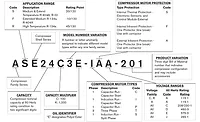
      Decode the Compressor’s Model Number Before Replacing Parts

      See More
    • Preventing Refrigerant Floodback and Migration Before It’s Too Late

      See More
    • The two most common causes of compressor failure are loss of lubrication and slugging, according to Brainerd Compressor Inc.

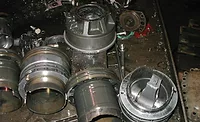
      Don’t Blame the Compressor

      See More

    Related Products

    See More Products
    • compressormotorwindingsdvd.jpg

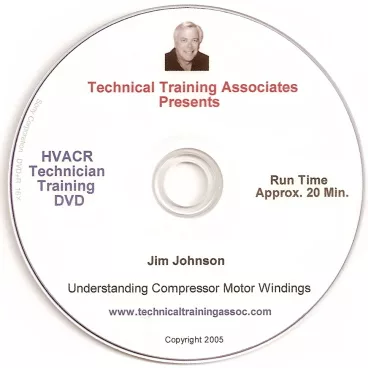
      UNDERSTANDING COMPRESSOR MOTOR WINDINGS

    • The ACHR News - February 16, 2026

      ACHR NEWS February 16, 2026, Issue

    See More Products

    Events

    View AllSubmit An Event
    • July 31, 2014

      Dead Men's Steam School

      Taught by Dan Holohan, the all-technical seminar will make you familiar with the many types of old steam heating systems and what goes wrong with them.
    • June 9, 2026

      Before You Go All In on AI: Set Up Your Business to Actually Win

      In this webinar, we'll walk you through exactly what to get in place before you add AI to your business. You'll leave with a clear picture of where you stand today and a practical action plan to set yourself up for real results.
    View AllSubmit An Event
    ×

    Sign Up. Stay Informed.

    The #1 trusted source for the HVACR industry since 1926

    SUBSCRIBE
    • RESOURCES
      • Advertise
      • Contact Us
      • Advisory Board
      • Classifieds
      • Submit a Letter
      • Directories
      • Store
    • ACCOUNT CENTER
      • Create an Account
      • Start a Subscription
      • Manage My Account
      • Sign Up for Newsletters
      • Visit Customer Service
      • Update Preferences
    • SERVICES
      • Marketing Services
      • Reprints
      • Market Research
      • List Rental
      • Survey/Respondent Access
    • STAY CONNECTED
      • LinkedIn
      • Facebook
      • Instagram
      • YouTube
      • X (Twitter)
    • PRIVACY
      • PRIVACY POLICY
      • TERMS & CONDITIONS
      • DO NOT SELL MY PERSONAL INFORMATION
      • PRIVACY REQUEST
      • ACCESSIBILITY

    Copyright ©2026. All Rights Reserved BNP Media, Inc. and BNP Media II, LLC.

    Design, CMS, Hosting & Web Development :: ePublishing