TABB Meeting Balances Career, Education

Keynote speaker Jim Larsen discussed how important TABB certification is to the industry, and spoke about his methods of getting engineers to specify certified professionals.
Preconference workshops were offered before the full conference began. Preconference attendees were able to take the National Energy Management Institute’s (NEMI’s) TABB Supervisor Class and complete the TABB Supervisor Certification Exam.
The regular conference commenced with the International Certification Board (ICB) rolling out its newest certification in HVAC fire life safety systems. Attendees completed the coursework and certification exam process in this, as well as in IAQ. A number of seminars introduced fume hood and bio-safety cabinet information.
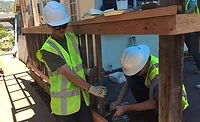
The Sheet Metal Workers’ International Association’s (SMWIA’s) Local 19 JATC sponsored this year’s welcome reception, tour, and tradeshow. A tour to the Philadelphia TABB Certification Lab included the use of tradeshow vendor tools in practical applications. The lab is one of the nine located throughout the United States.
CONTRACTOR'S KEYNOTE
On the final day, keynote speaker Jim Larsen, of Mechanical Test and Balance, discussed his success as a TABB-certified contractor. Larsen highlighted how important TABB certification is to the industry, and spoke about his methods of getting engineers to specify certified professionals.Starting off as a lone contractor, he quickly built his business to include two offices in Indiana and Illinois, with 15 full-time employees. The company now is the leading provider of testing and balancing in the Indiana and Illinois region, according to TABB.
“Once I decided to specialize, I knew I wanted to be the best I possibly could be at testing and balancing,” Larsen said. “Education was my best tool.” He found TABB and its certification program around 2000. Larsen quickly became certified and began to use his certified status to his best advantage.
“Some people think that once you have a certification, work just automatically comes your way,” he said. “Or they believe the certifying organization is responsible to find the work for them. But the truth is, while certification is a tool that helps open the door, in the end it’s me and the knowledge I gained through TABB certification that gets me the job.”
Because he believes his knowledge makes him a superior contractor, “it was up to me to make sure everyone in my regional field knew and understood what it meant to specify TABB-certified professionals.” Larsen estimated that he has sent hundreds of letters introducing building owners and engineers to his company and to TABB certification. He conducted up to five brown-bag lunch meetings each week, and logged thousands of miles on his car to meet with engineers face-to-face, and educate them about TABB programs when specs did not specify certified contractors or technicians.
“Engineers have boilerplates, and sometimes they don’t get changed for years, even as staff comes and goes,” Larsen said. “It’s important to get to those engineers and convince them to change those boilerplates to require TABB-certified contractors and technicians.” He said that in almost 99 percent of the jobs he would have lost due to an unchanged boilerplate, he was able to become specified because he personally met with the engineer. “Those engineers really respected the fact that I came in personally to talk to them.”
WRAPPING IT UP
A panel discussion near the end of the conference covered best business practices, including customer service (presented by Matt Cole from Wing Test and Balance); office procedure for TABB forms (Don Diningre of Gowan Inc.); and minority contracting (Paul Jaeger from Brison Mechanical Group, St. Louis).Attendees were shown how to run their offices more efficiently, how being green can increase opportunities, and the challenges and rewards of minority contracting. TABB’s Hall of Fame Award recognized contractors in the industry who have made significant contributions by setting exemplary standards of service or by providing innovating ideas that strengthen the value of TABB certification. This year’s recipient was Vince Delvocicio from Keystone Balancing.
The conference concluded with an ICB Open Forum, where attendees, presenters, speakers, and industry experts shared information and insights on future certifications. Individuals can offer direct input to the ICB. This information helps ensure that the TABB program meets the needs of participants and improves their success in the industry.
The 2010 TABB Conference will take place in San Jose, Calif., May 5-9. For more information, visit www.tabbcertified.org or call 703-299-5646.
Publication date: 07/20/2009
Looking for a reprint of this article?
From high-res PDFs to custom plaques, order your copy today!